Podura aquatica: Springtail of the month
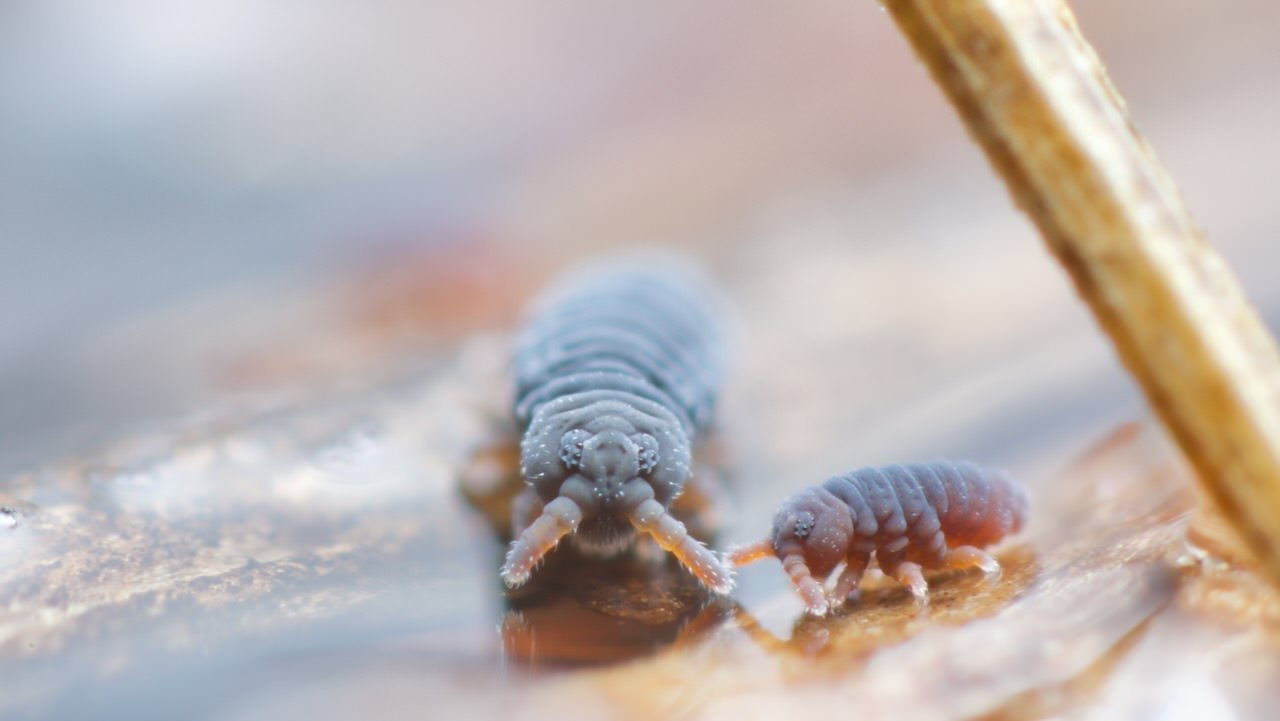
Adult and juvenile Podura aquatica
Avalon Marshes
I live near Glastonbury in South Somerset, within walking distance of the Avalon Marshes, a large complex of old peat extraction areas, bought together as nature reserves. It’s now a beautiful haven for rare insects, flowers and birds, a rich and diverse place, belying the distant memory of centuries of peat extraction and the desolate black pits and gouges ripping down through 12 000 years of peat buildup. Sadly, surrounding the marshes, peat extraction still continues, despite huge pressure against the practices continuing. Legislation is needed urgently to finally stop it.
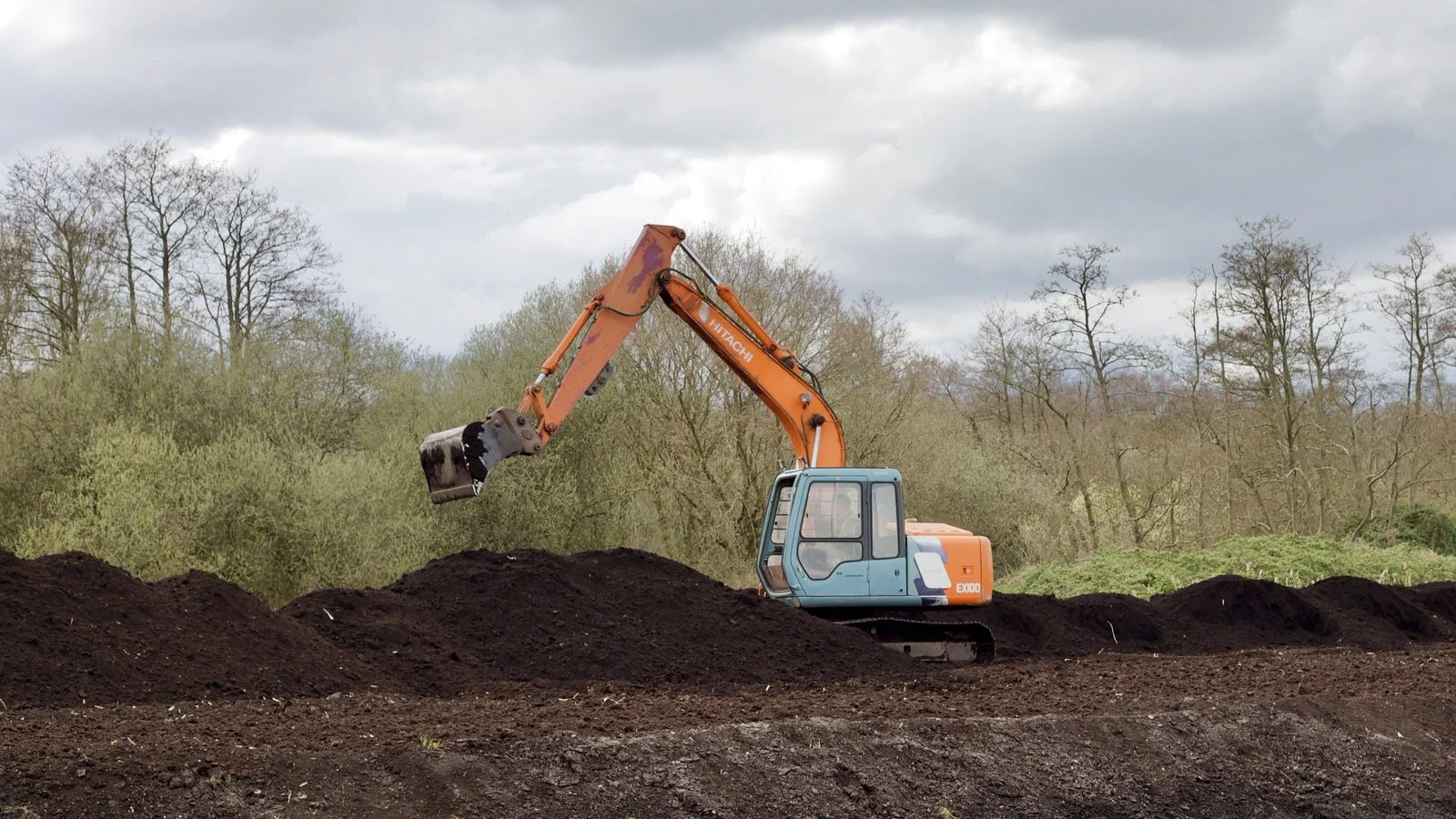
Commercial peat digging at Shapwick Heath, Somerset, UK
At least in the marshes, the landscape is carefully managed to encourage, restore and preserve the restored ecosystem. It’s really not hard to imagine the area as it once was, thousands of years ago, when humans once built long trackways over the water and peat, threading their way through the wet, tree and scrub-filled ground. It’s truly a wonderful place.
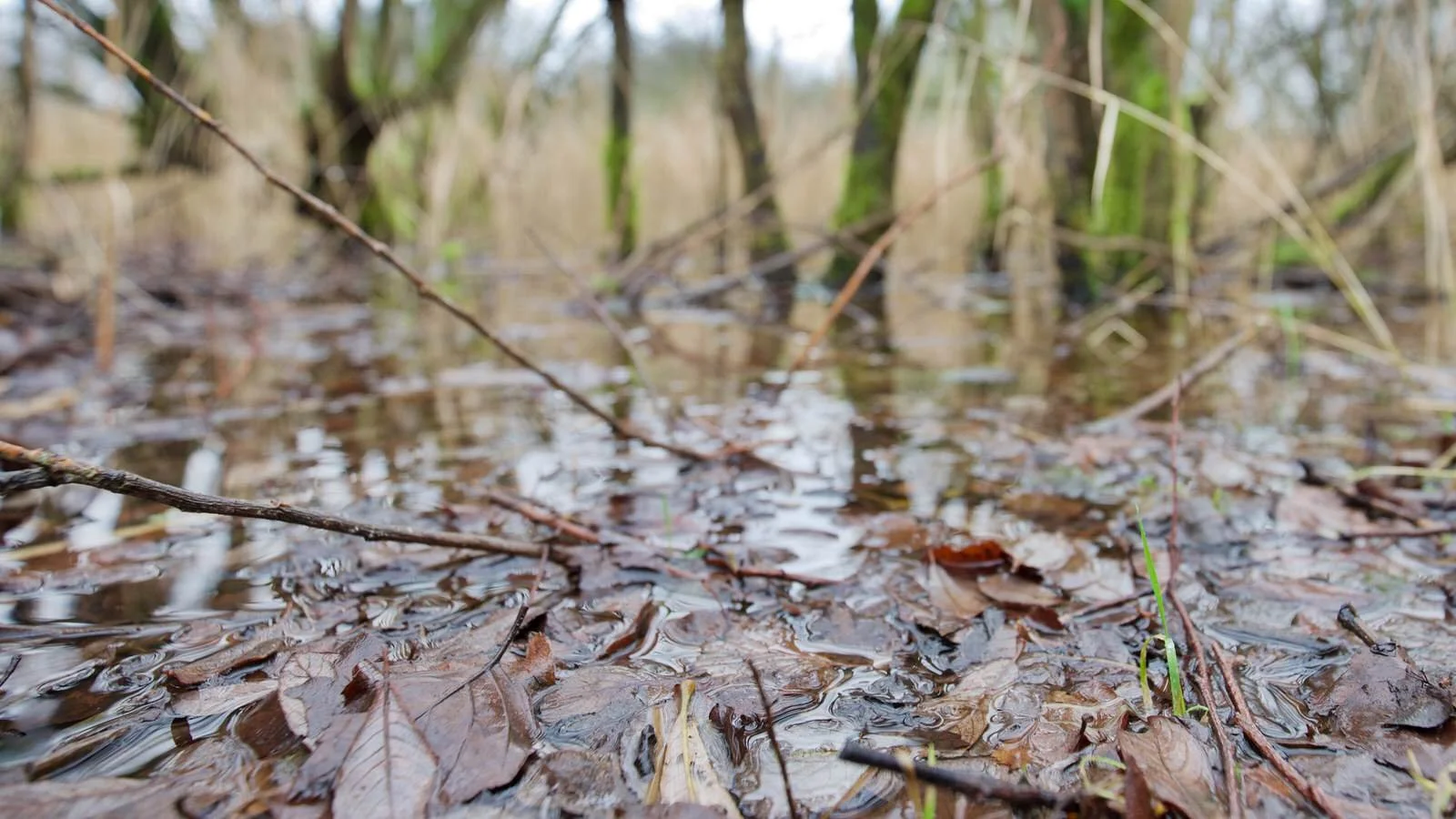
A marshy habitat at Shapwick Heath, Somerset, UK
Podura aquatica, a most remarkable springtail
Across the shallow, tannic pools, ditches and rhynes, it’s possible to find many semi-aquatic springtails, living out their tiny lives. As it happens, Shapwick Heath has a relatively easily accessible population of a highly unusual and beautiful springtail, Podura aquatica. They are an aggregate species, living in groups at the water-soaked pool edges as well as on the water surface itself.
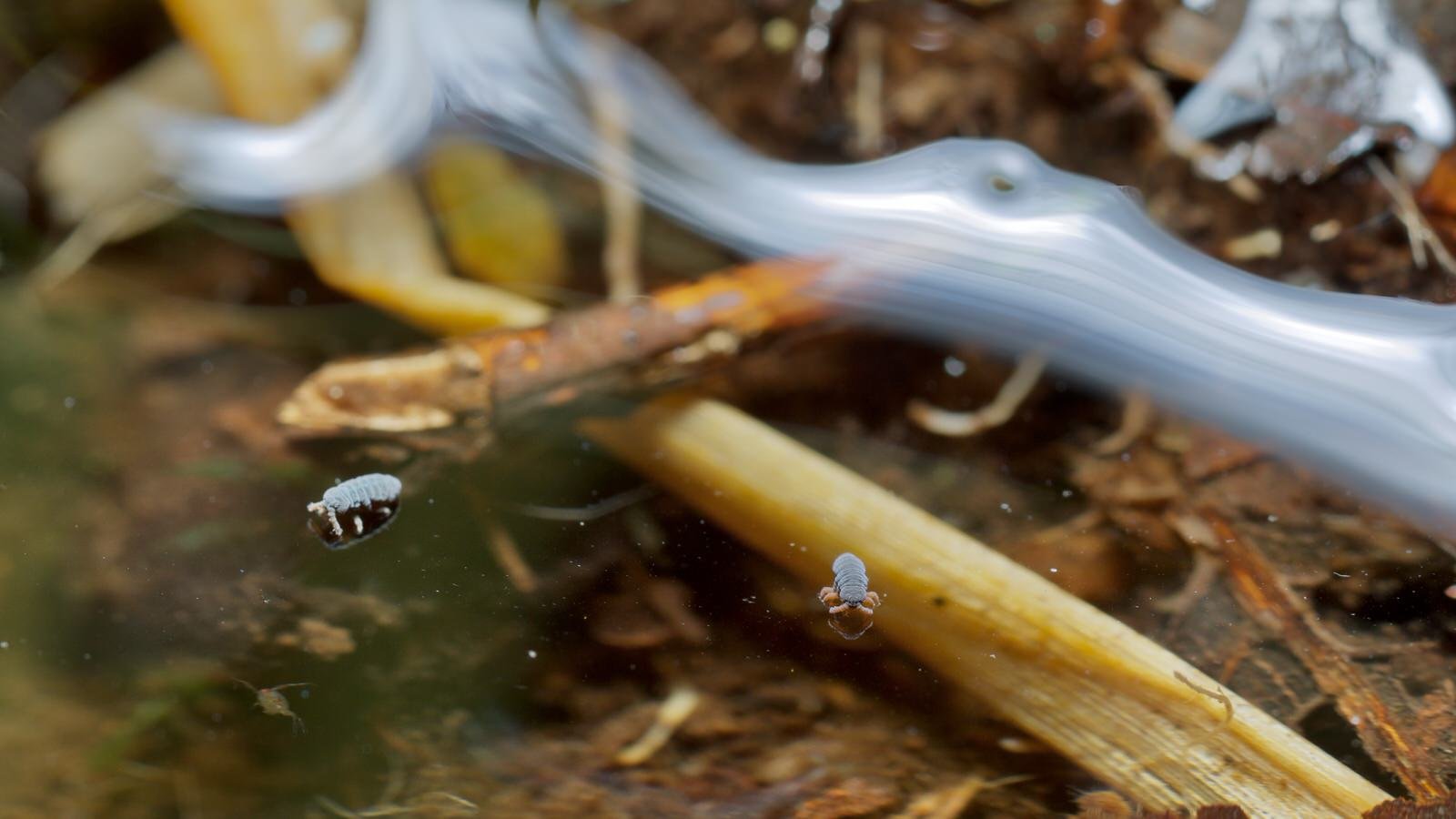
Podura aquatica standing near the edge of a pool of water, Shapwick Heath, Somerset UK
There is one genus in the family Podura, with four recorded species:
Podura aquatica, the most globally common aquatic springtail and the one featured here;
Podura fuscata and P. pulchra, both very much extinct and only known from fossil amber; and
Podura infernalis, described by Victor Motschulsky in 1850.
The two extinct Podura species are unlikely to have been aquatic due to them being preserved in amber, requiring any aquatic animals to have somehow left their water-based environment and gone exploring before getting stuck in tree resin. With P. infernalis, the springtails were found deep within ice caves in Siberia, in Russia, again in a non-aquatic environment. Although unfortunately, that seems to be the first and last time that species ever saw the light of day as the trail goes cold at that point. And other similar puns. It’s frustrating to know that there might be another extant species of this amazing genus out there but also noteworthy that it hasn’t been recorded since. Looking at Motschulsky’s very, very short, pretty much unusable description and the fact it has never been found since, it seems more probable that the genus was mis-identified, as seems to have often happened with nineteenth century entomologists. It’s still possible but in this case, we can really only confidently point to a single species in the genus right now, and that’s P. aquatica.
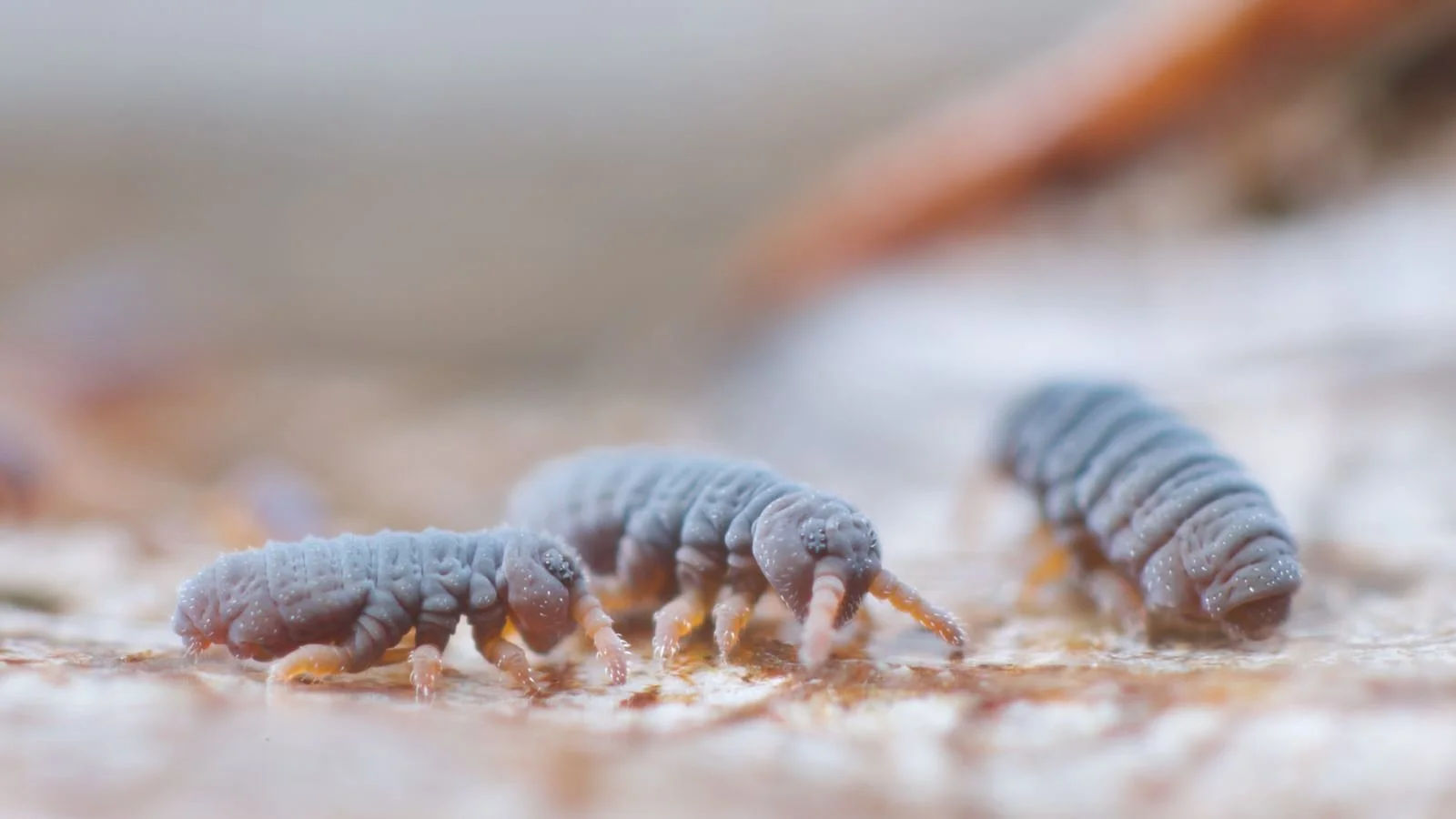
Podura aquatica at the water’s edge
Podura aquatica are incredibly enjoyable springtails to watch and photograph, with their stout, pinkish orange antennae and legs and big, soulful looking eyepatches. They look like sweet, chubby little blackcurrant gummy bears.
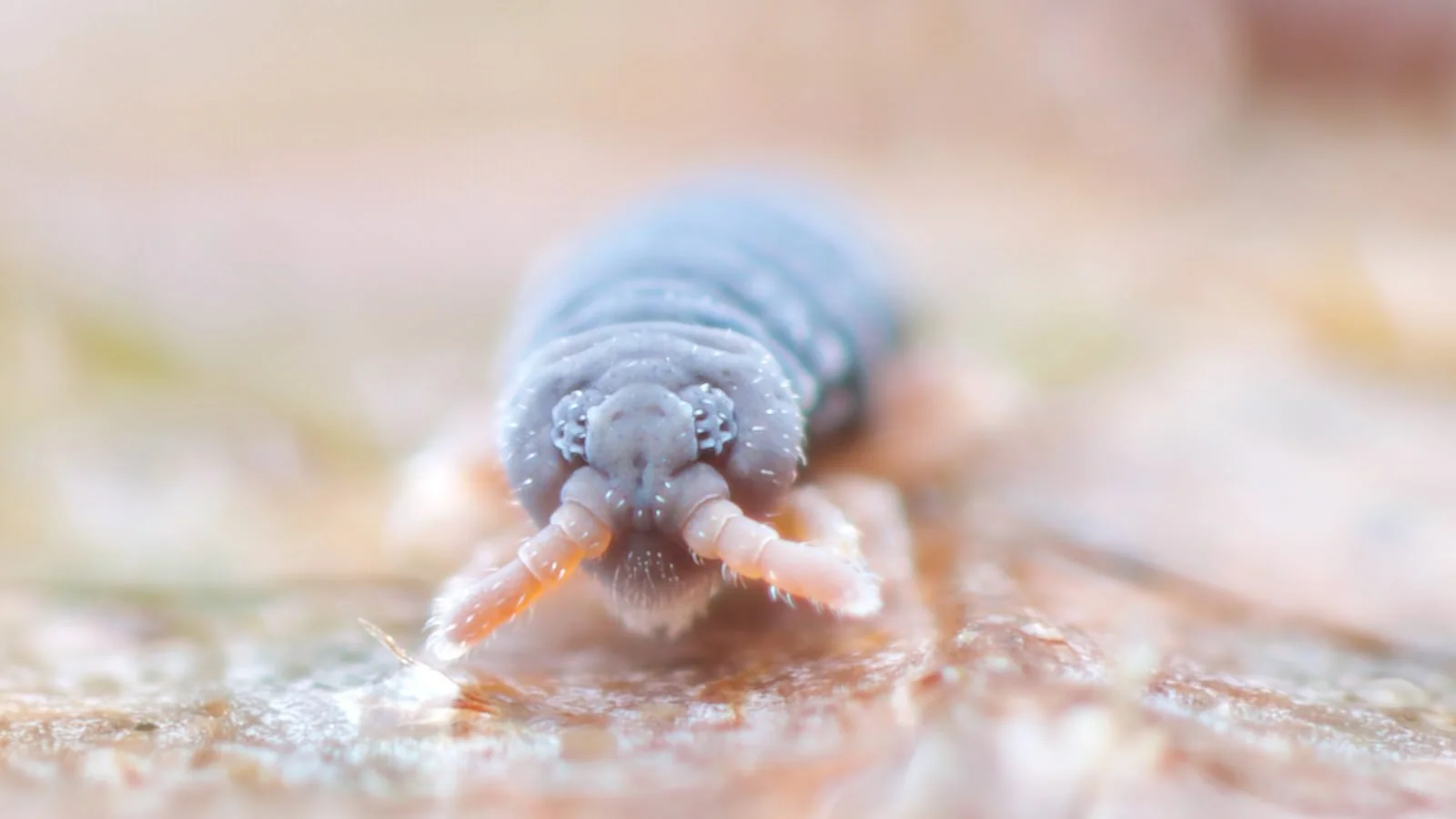
A close up of the face of Podura aquatica
Podura aquatica lifecycle
Podura aquatica males have rather bizarre and specialised spermatophores that I’ve never managed to photograph (if I ever do, I’ll add it to this blog). On dry land, springtail sperm packets are on the top of an extruded stalk which is attached to substrate. On open water, the P. aquatica male extrudes a floating raft before building a spermatophore on top. The female then absorbs the sperm packet, fertilising her eggs before laying them on the water surface. As another amazing adaptation, the eggs are hydrophilic, so as soon as they are laid, they sink to the bottom of the water, where they stay for a few weeks until the eggs finally hatch. The new hatchlings are hydrophobic thanks to their cuticle and immediately pop up and out through the water meniscus where they will spend the rest of their short lives.
As shown in the two photos below, these orangey white newly-hatched springtails are tiny, big-headed and big-eyed versions of their parents. They are around 0.1mm big and incredibly cute.
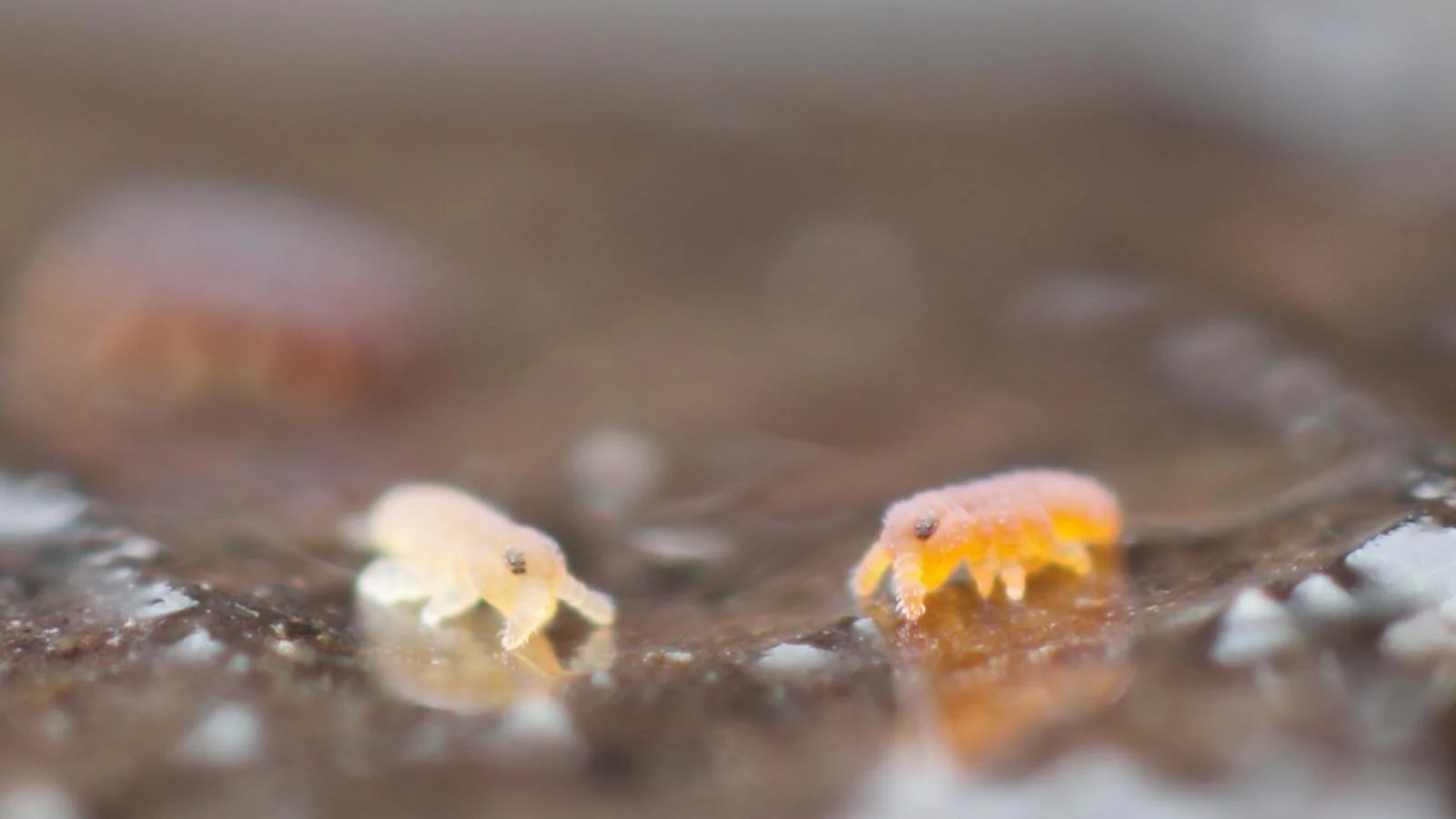
Two freshly hatched Podura aquatica babies
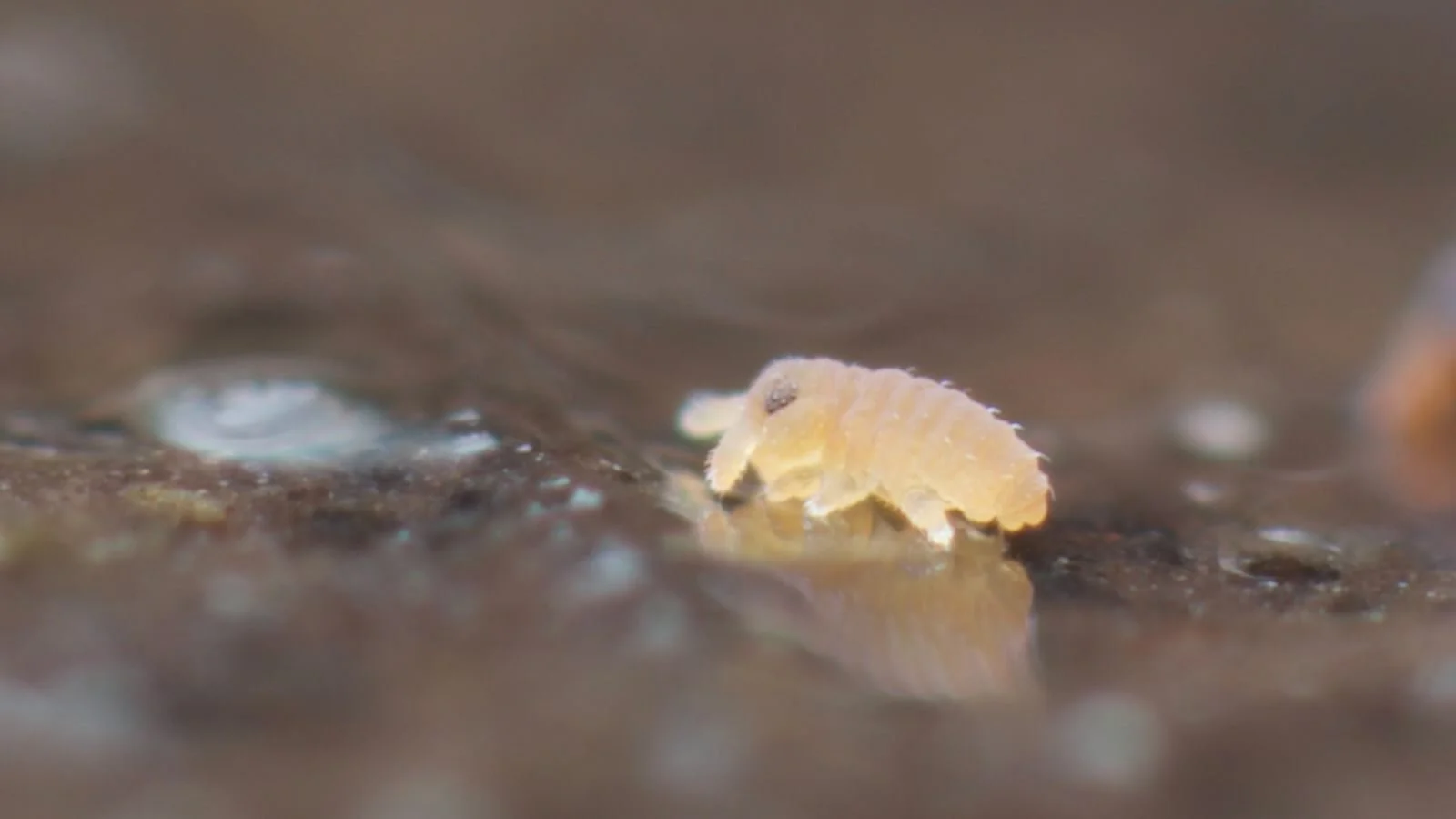
Podura aquatica baby having its first stroll
As the baby springtails moult and grow, their colour slowly darkens to a pleasing reddish mauve, before darkening even more to the bluish black of an adult. They desperately need to be hugged and loved.
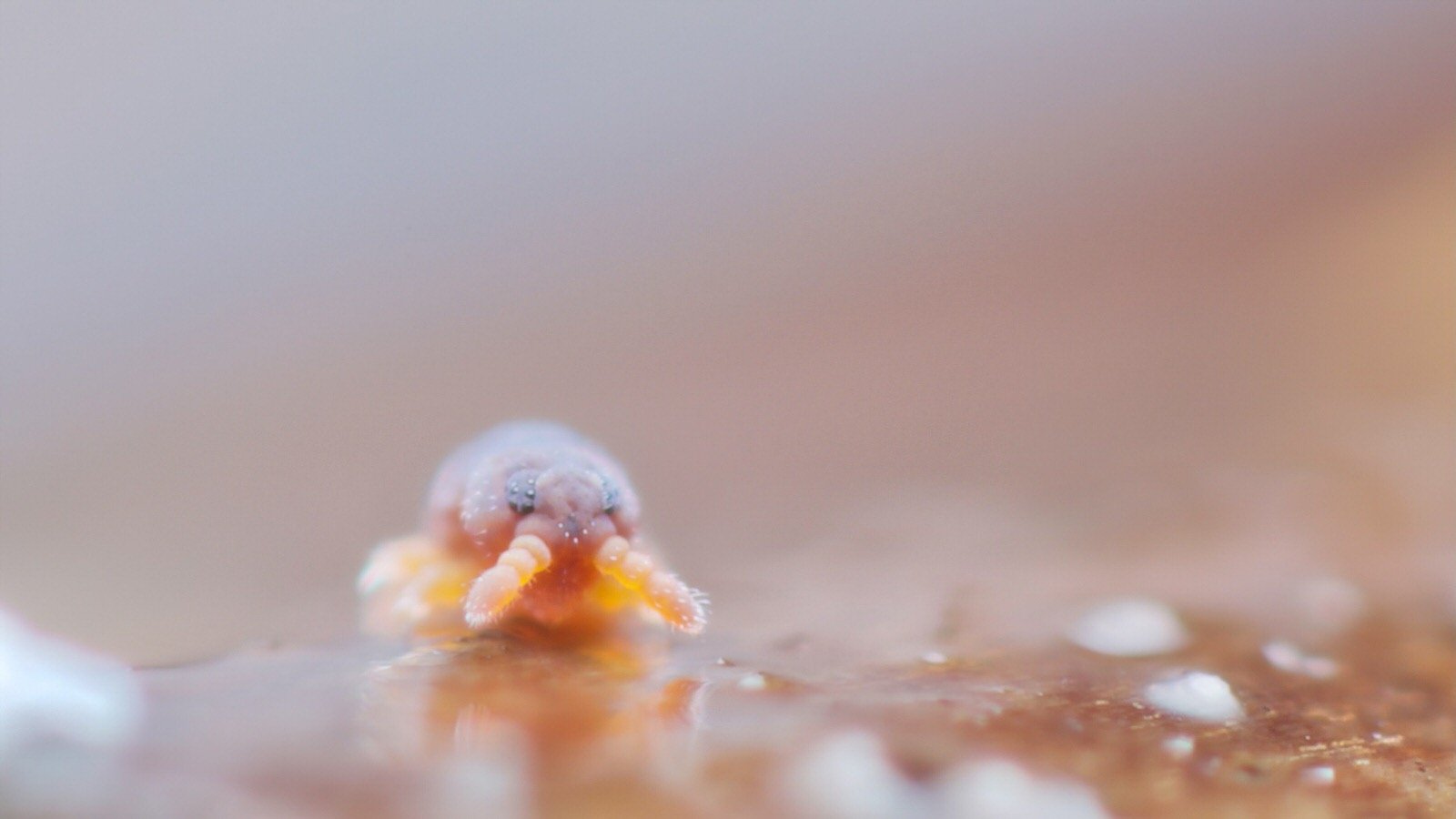
Face of a beyond cute juvenile Podura aquatica

Two juvenile Podura aquatica walking on water
Podura aquatica was first named and described by the famous namer of things, Carl Linnaeus in 1758 and the springtail remains one of the first springtails ever to be studied. This is likely because of their ubiquity and obvious and easy to see massing in their dark thousands on still water.
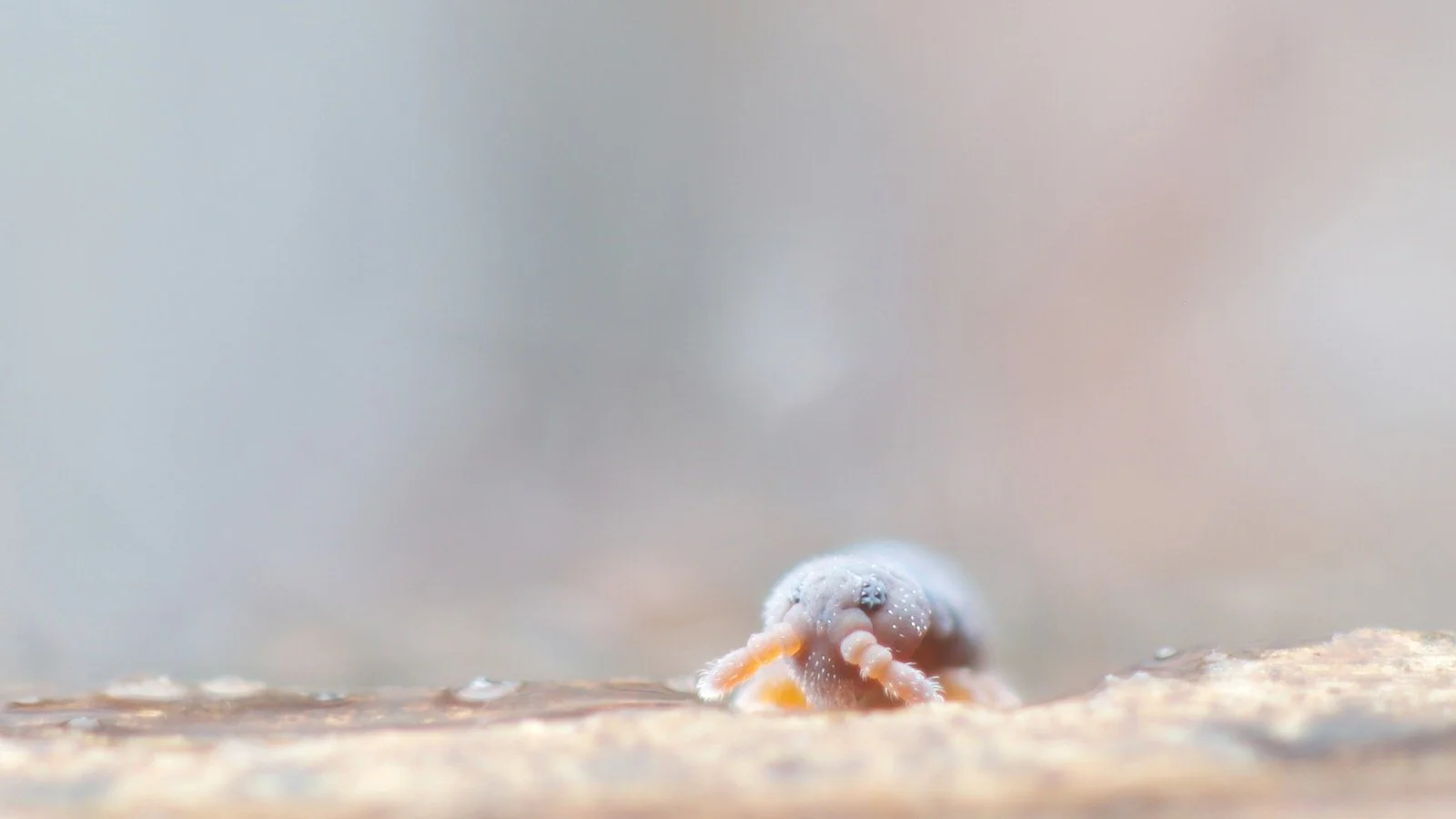
An almost adult Podura aquatica
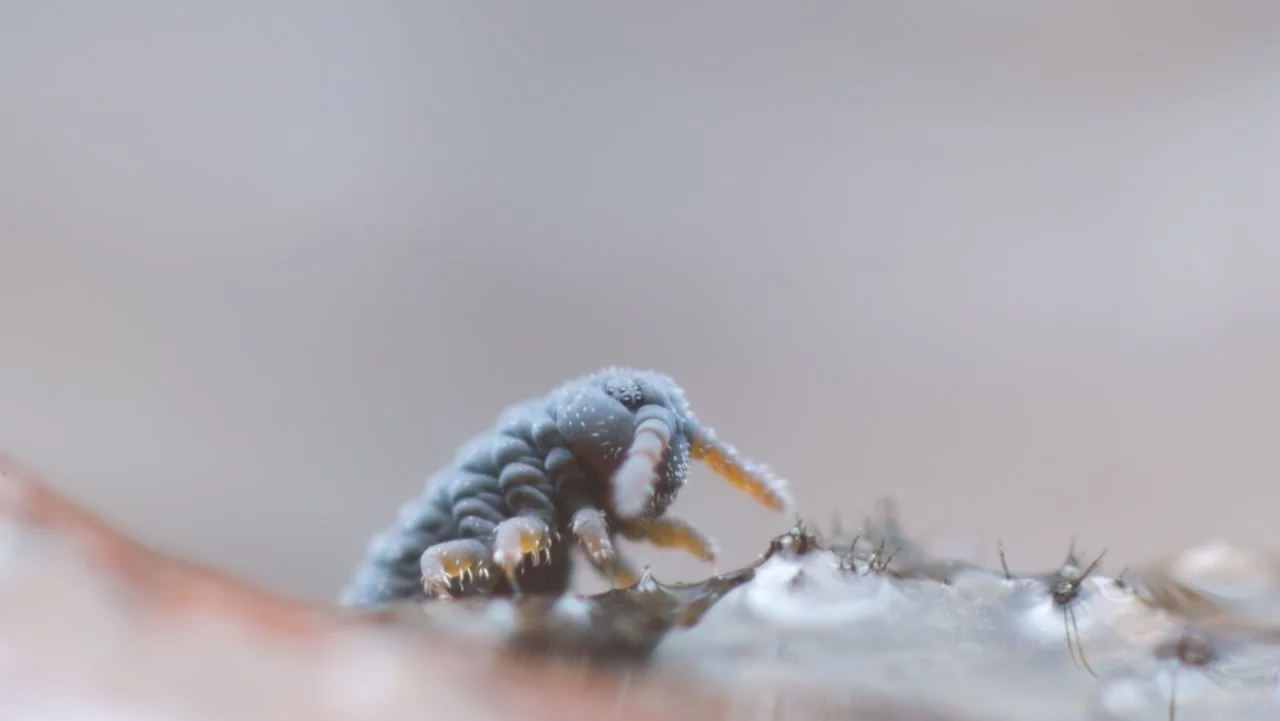
An adult Podura aquatica rises over the brow of a water-soaked twig
Podura aquatica adaptations
Podura aquatica have some very specific adaptations enabling them to more easily live on the water surface. They exhibit both positive phototaxis (an attraction to light) and positive polarotaxis (an attraction to horizontally polarised light reflected off a water surface). This is achieved through having a highly unusual eye structure, with two distinct sets of ocelli. The top two ocelli sense light while the six ocelli facing downwards sense polarised light. Which is amazing.
They have long claws and flattened, paddle-shaped mucrones at the tip of the furca (the jumping organ) that enables them to connect better with the water surface when jumping out of danger. A comparison would be the difference between hitting a water surface with the edge of your hand (cutting into the water easily) and slapping the surface with the flat of your hand, which hits and bounces off with a load of flying water, and which feels like hitting a wet wall, depending on how hard you do it. It’s very effective. P. aquatica are very sensitive to any disruption of the water surface including any falling detritus, algae or fungal spores which they can then eat. They are also renowned for jumping en masse like bouncing gunpowder across the water when the wind changes or a reed touches the water. In the photo below, three juveniles are captured mid-jump, with furcas still extended.

Jumping juvenile Podura aquatica
In the next photo, another two juveniles are also captured mid-air, above their fresh moults, while an adult looks on. I should point out here that it took me rather a long time to actually manage to photograph P. aquatica jumping as it happens so fast. All you can do is point the lens in the right direction, vaguely guess when to press the shutter button and the focus and hope for the best. They jump and land incredibly quickly, within a tenth of a second, spinning incredibly rapidly as they travel, due to the explosive release of their jumping organ. Interestingly, as a by-product of this release, their rapid spinning through the air extends the length that they travel during a jump, due to the Magnus effect.
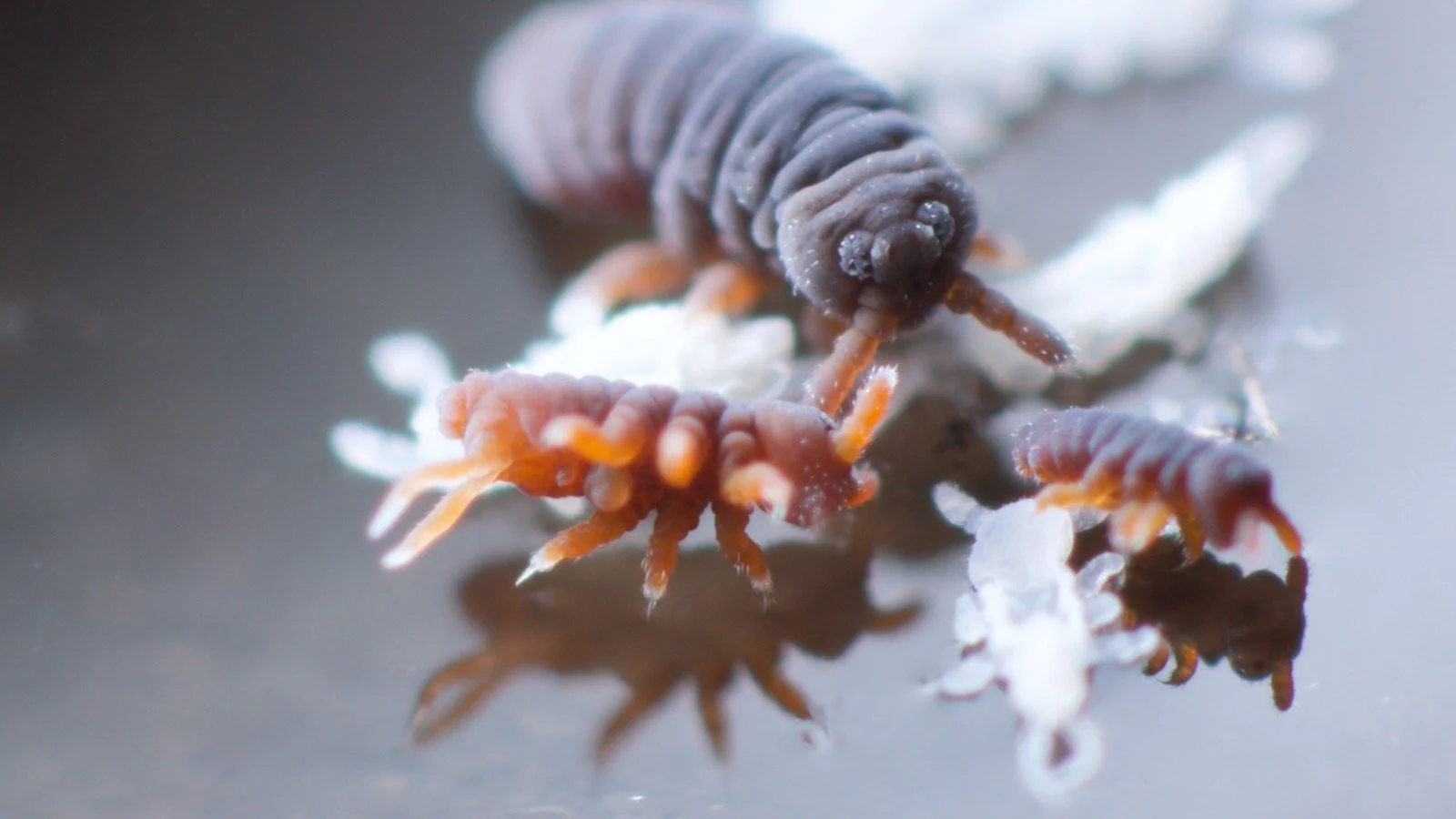
Jumping juvenile Podura aquatica with exuviae
All springtails, P. aquatica included, continue shedding their skin or moulting throughout their lives, a trait shared with their very distant crustacean relatives. Their white, discarded exuviae can be found scattered in profusion across ponds, still exhibiting their strong water-repellent abilities as shown in the first photo below, where a single moult is able to strongly distort the surface tension. They are perfect, ghostly simulacrums of the living animals, with every detail preserved from antennae to furca.
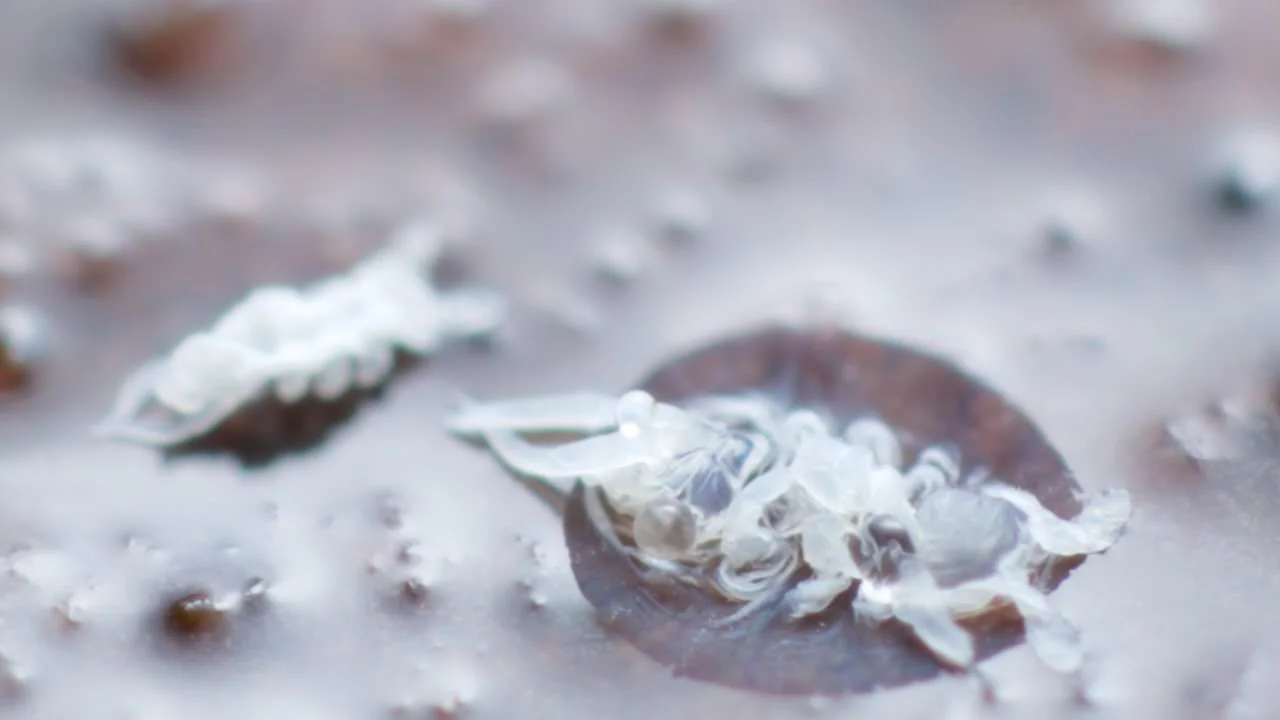
Two moulted P. aquatica exuviae
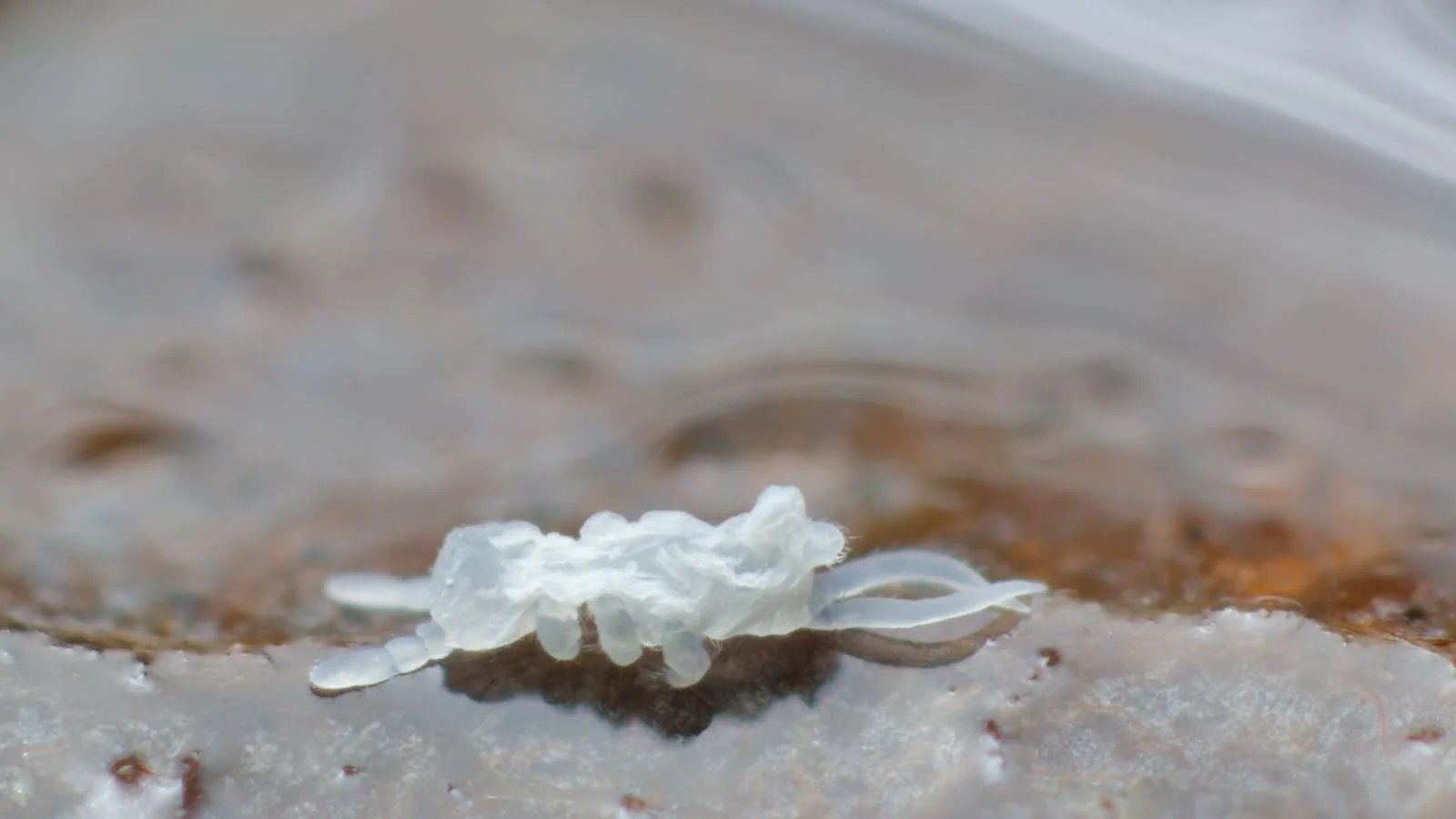
A single moulted P. aquatica exuvia
It’s impossible to have a favourite springtail, but the beautiful and endearing P. aquatica comes close. They are made all the more interesting for me due to them being challenging to photograph well, as they are small and live on very reflective and hard-to-access water that tends to be surrounded by wet, cold, stinking mud and layers of rotting leaves. But they really are worth it. If you don’t mind getting muddy knees and you find yourself at the edge of a wet bog or marsh, have a look and try and find them yourself. They’re amazing.
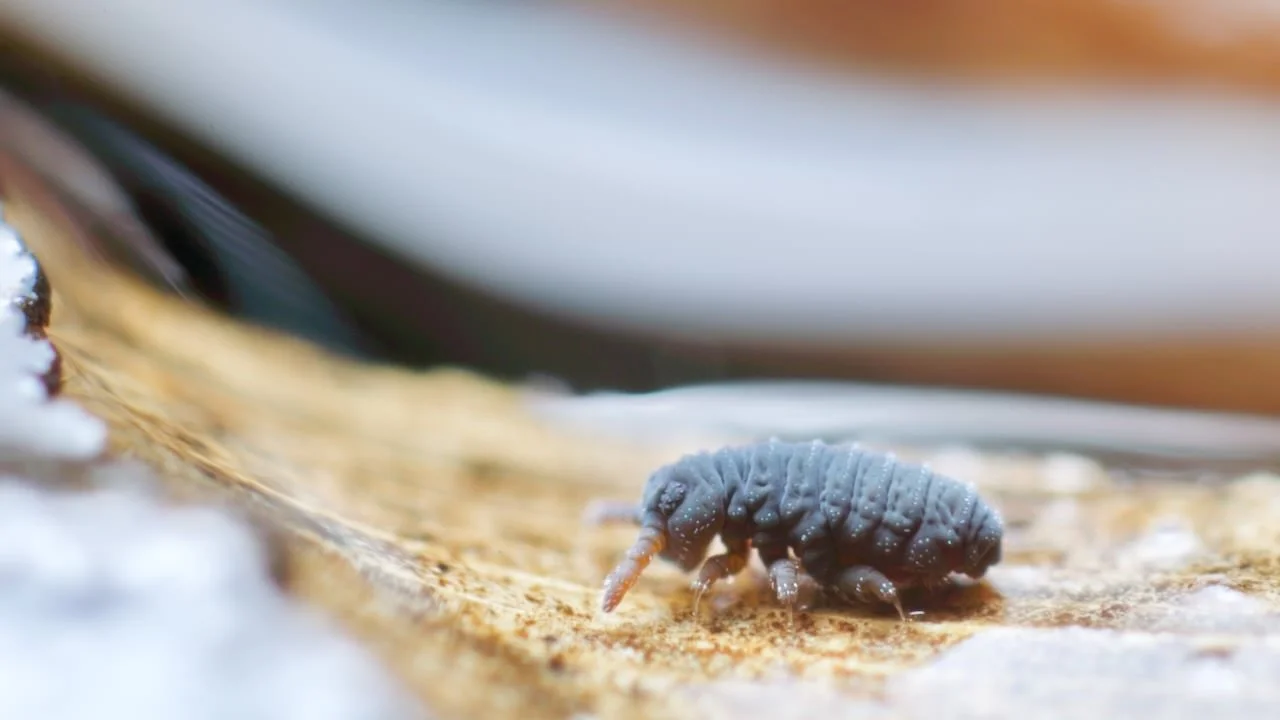
An adult P. aquatica