Exploring the concrete jungle: Urban soil animals and World Soil Day
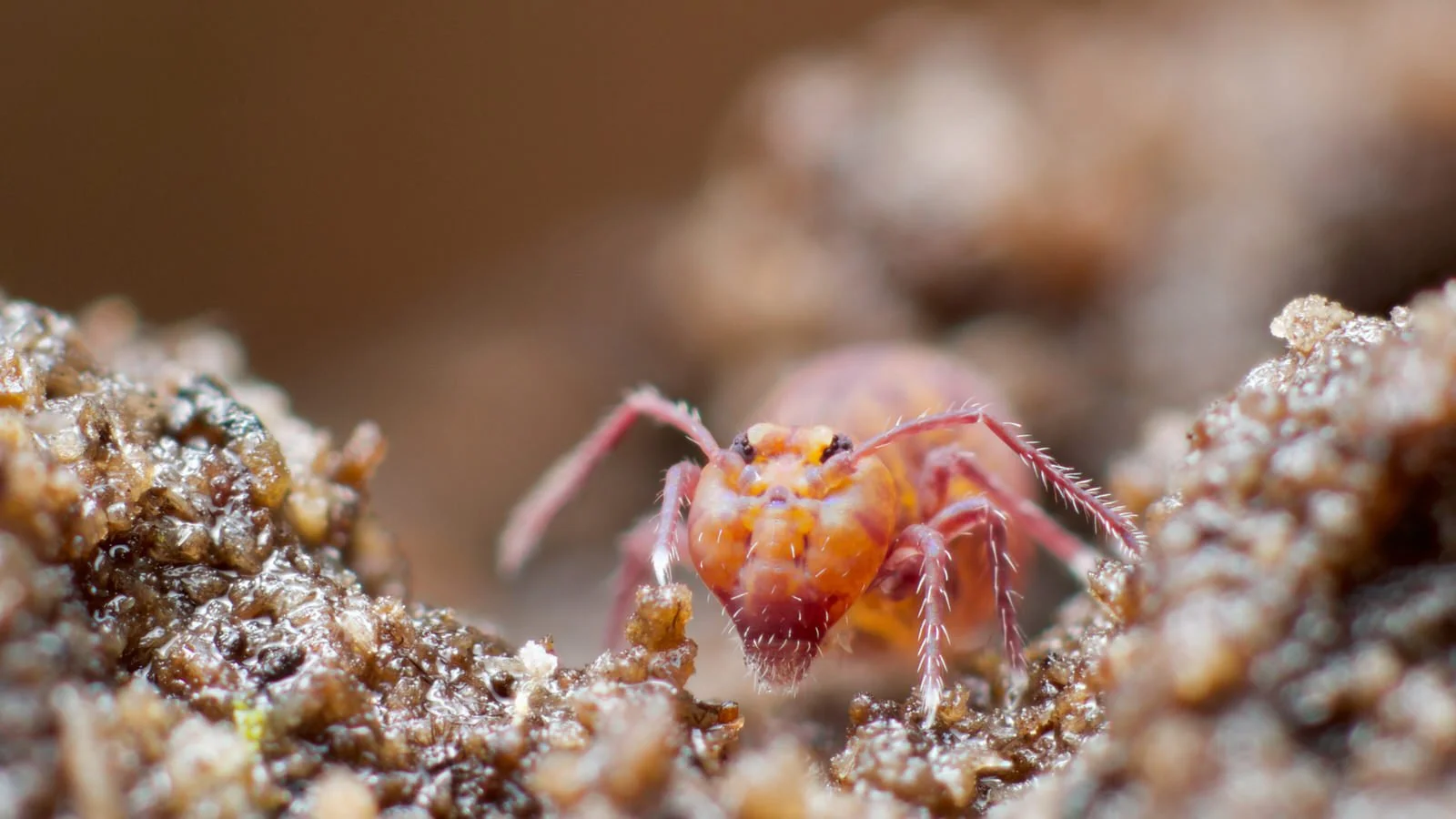
Dicyrtoma fusca, a common urban springtail, stood on topsoil
Soil is the last truly unexplored region of the planet, and it lies right below our feet. More than half of the world’s entire biodiversity exists in the soil, but nearly all is unrecorded and unknown, including countless billions of ancient, tiny animals known as the mesofauna. They live within a dark, complex world of alien senses and incomprehensible beauty, silently living out their short lives, transforming and helping create soils as they have done for at least the last 450 million years.
But that incredible, fragile world has been deteriorating year by year, due to anthropogenic climate change, erosion, deforestation, urban expansion and land conversion, and unsustainable agriculture practices. Twelve million hectares of soil are now being lost every year to desertification and degradation and with it, countless unknown species become extinct with unknown detrimental future effects. Sadly, soil has been overlooked, disregarded and misused across the planet for a very long time and we are paying the cost.
However, all is not lost.
In 2013, the United Nations designated 5 December as World Soil Day, with the first celebration being held the year after, in 2014. Since its inception, its purpose has been to focus positive attention on the importance of healthy soils, advocate for the sustainable management of soils worldwide, educate populations about the links between food, farming and soils, and drive for policy change.
Since World Soil Day began, it has been facilitated by the Food and Agriculture Organization of the United Nations (FAO) under the framework of its Global Soil Partnership (GSP) and has become a major annual event across the world. Soil biodiversity and soil heath have finally become major discussion points in international policymaking and governmental guidance around the world. We are waking up to the reality that our soils are precious and worth fighting for.
Every year, a different theme is selected for World Soil Day to highlight different, specific aspects of soil. The theme for World Soil Day 2025 is “Healthy soils for healthy cities,” which emphasises the importance of living soils in urban environments, especially as over half of us already live in an urban setting. Urban soil sealing – caused by the use of impermeable materials such as concrete, asphalt and buildings – has numerous detrimental effects. These include the loss of soil functions and habitats, the intensification of urban heat islands, increased pollution, soil compaction, and greater runoff and flooding. Addressing these issues requires national and local level efforts to enact careful and swift changes through legislation, improved zoning and planning regulations and green urban planning, de-sealing efforts, the introduction of green infrastructure, and soil remediation strategies. A good scientific paper on this is How nature-based solutions contribute to biodiversity in cities?
In other, simpler words, the more we re-green our urban spaces, the more we help everyone and everything. Even the smallest change helps.
In celebration of the theme of World Soil Day 2025, I thought I would write a short blog post showing some of the remarkable and beautiful tiny soil animals that can be found surviving and sometimes thriving in an urban environment. Together with the wild flowers growing in the pavement cracks, they are the last remaining memories of the fields and forests that used to be there and the soils that sustained them. They are holding on, waiting for a chance to return.
If you kneel down and, using a magnifying glass or loupe, look under any discarded, dampish piece of wood in a car park, peer down the cracks between pavement slabs, inspect any moss growing on the concrete kerbs or asphalt, or pick carefully through any buildup of leaves against a wall, you stand a good chance of finding tiny springtails, mites or fly larvae going about their lives. It’s incredible what is able to survive and even thrive in a visibly inhospitable environment, even without access to soil. If you are lucky to live near a park or urban green space, then obviously these are often oases for wildlife of all types, and especially good for discovering soil animals, but I will concentrate here on the more extreme soil-sealed environments.
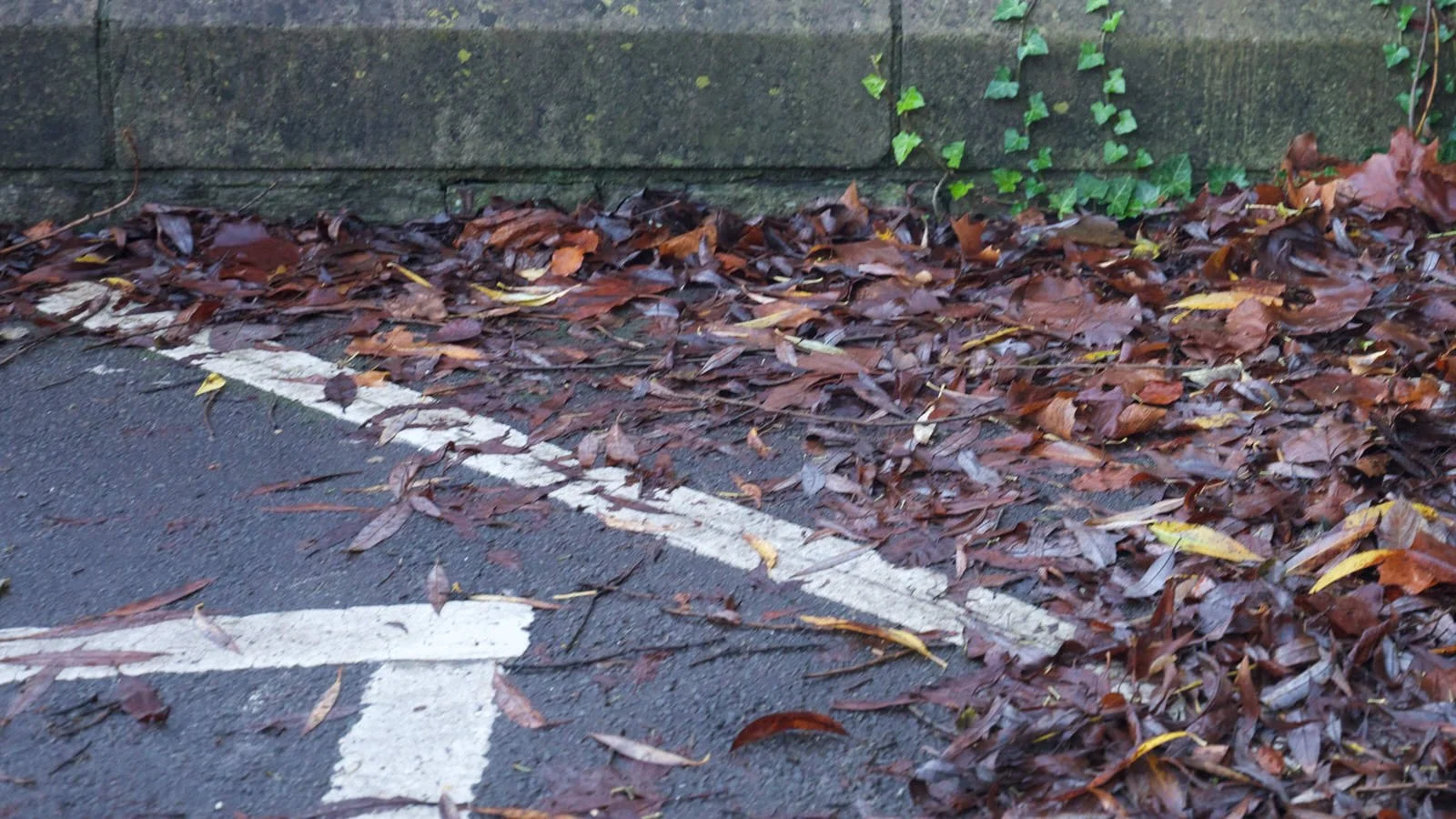
Piled leaves at the edge of a car park
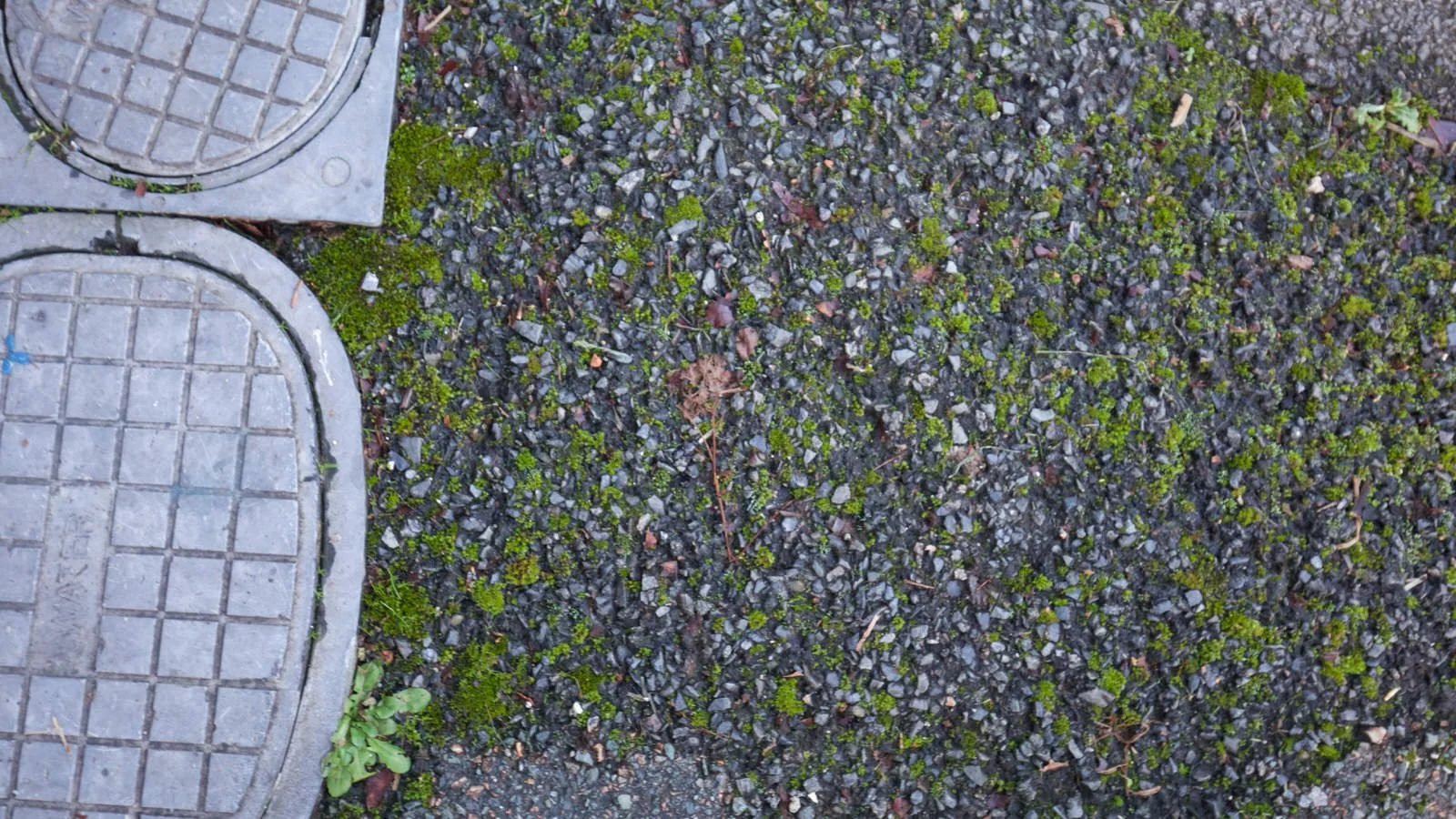
Moss growing on asphalt.
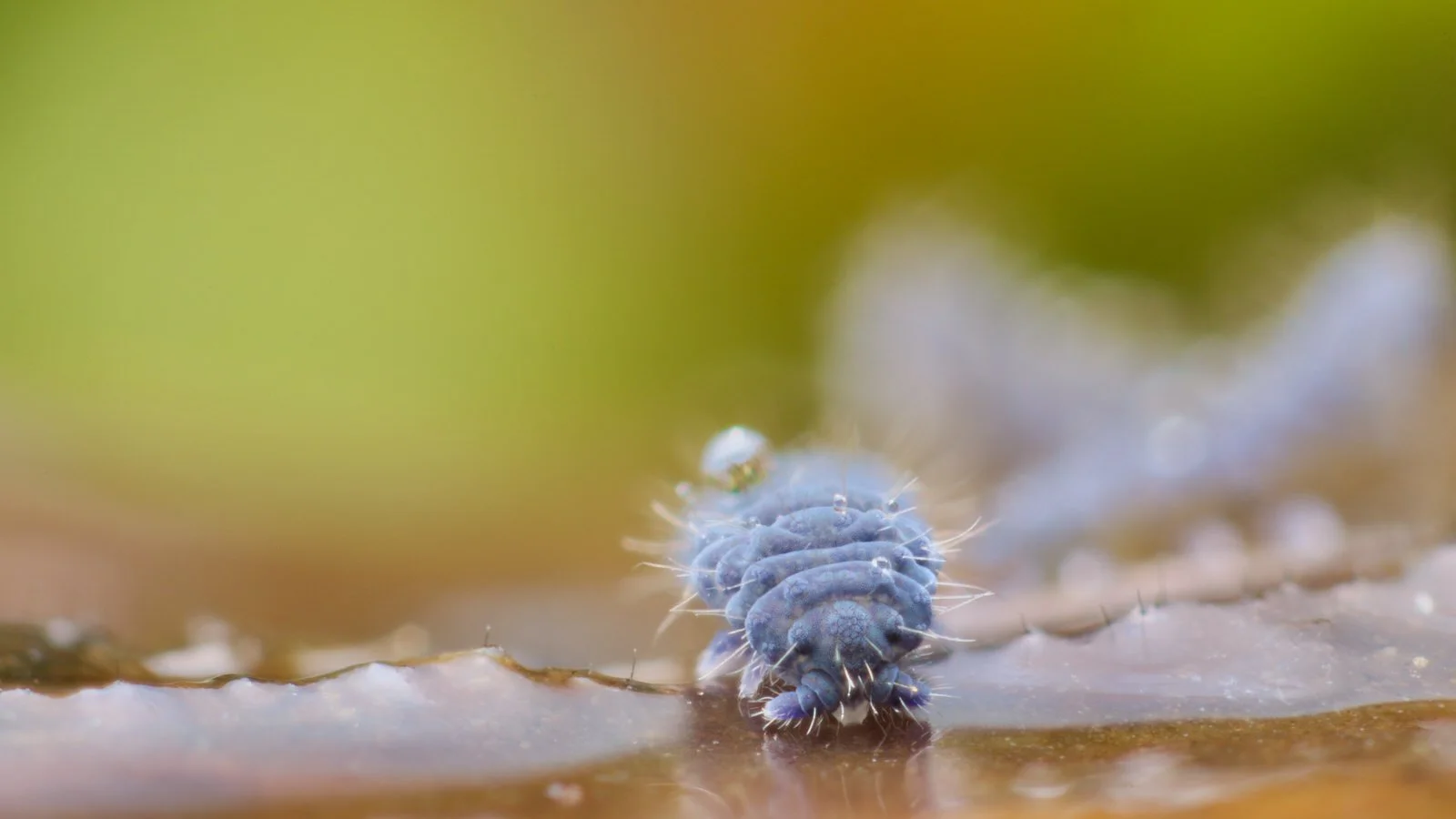
What follows is a rough overview of the kinds of soil animals you should be able to find in any urban, concrete-filled city or town space, no matter where you live in the world. In a soil-sealed city landscape, biodiversity is massively reduced across all forms of plant and animal life, but there are still many wonderful tiny animals surviving, such as the cosmopolitan bright blue springtail, Neanura muscorum (see below), which is now found around the world. Some other localised but adaptive and generalist springtails can also be discovered, as well as other soil animals like predatory mites, pseudoscorpions and fly larvae, better able to cope with high levels of change, pollution and life in an often seemingly inhospitable concrete jungle.
Some Dicyrtomina species are very adaptive and resilient, so will often appear in huge profusion in urban areas in much of Europe and the UK, like this beautifully patterned Dicyrtomina saundersii. And I mean everywhere, especially under fallen leaves. There can be three or four on each leaf…
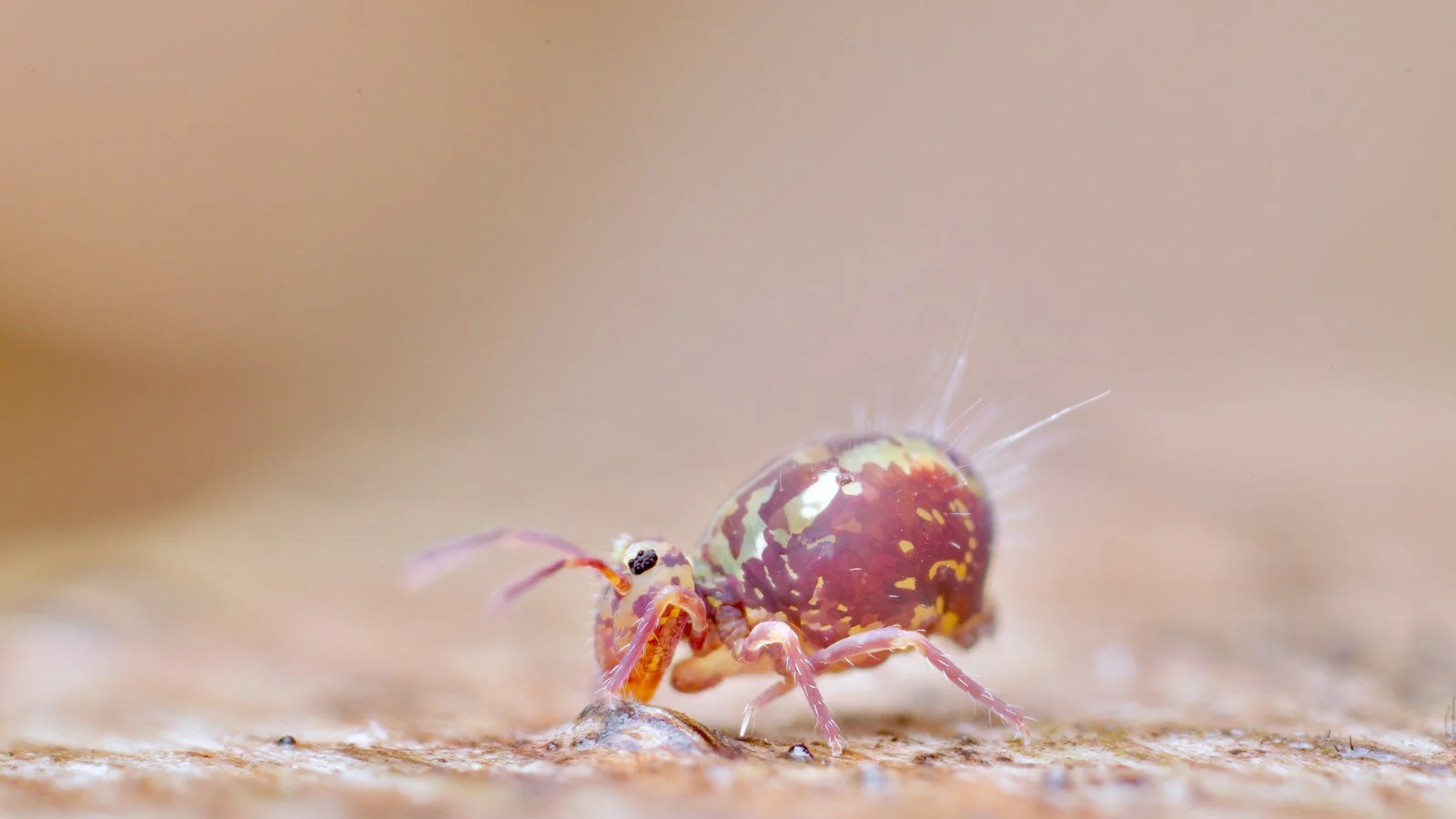
Most predatory prostigmatid mites look very similar across the world, usually with this distinctive shape, a brown colouration and incredible speed. They will hunt anything, but will mainly attack and take springtails, mites and small larvae, like the beetle grub this one has found.
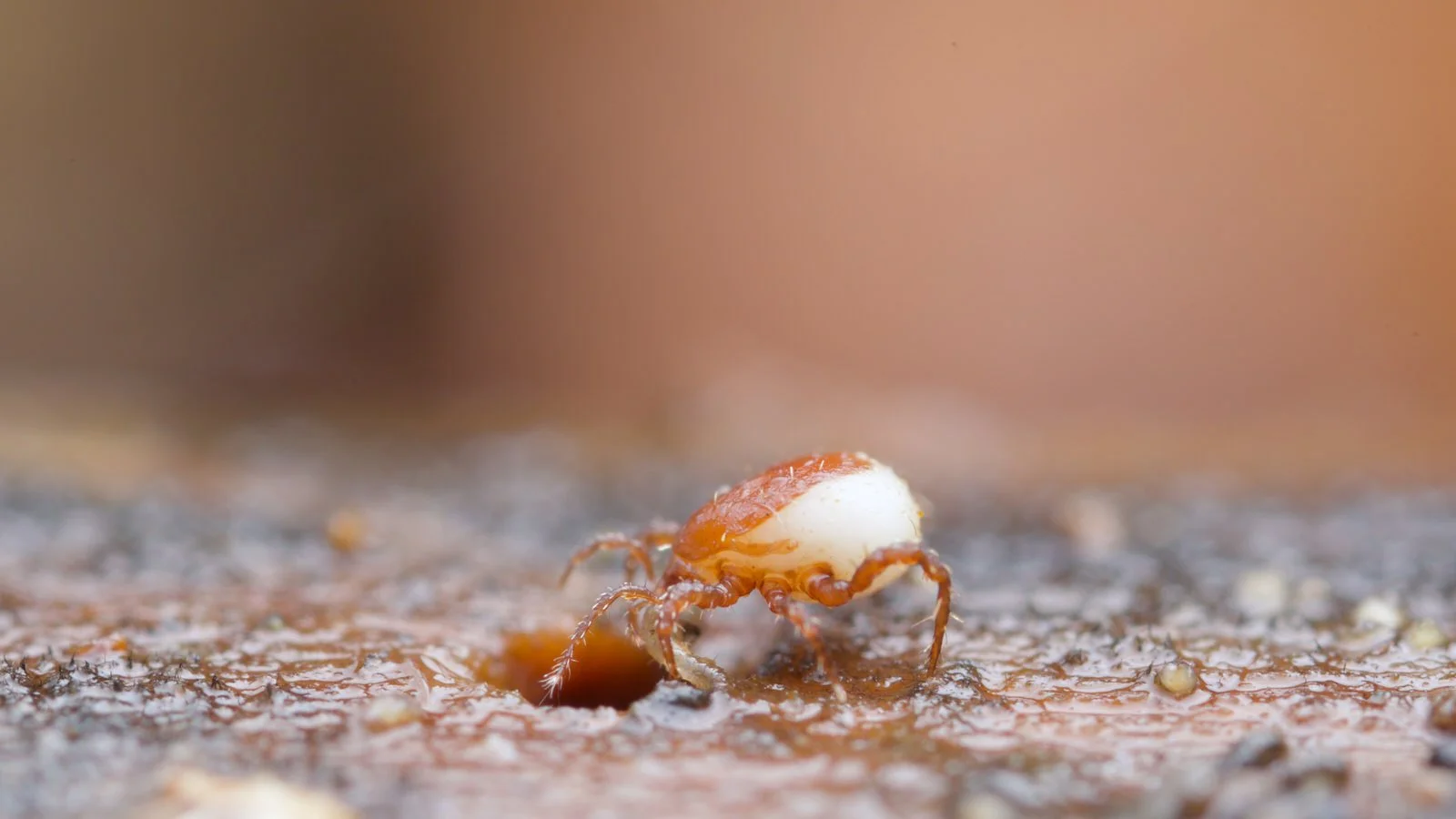
The other main predator that can be found in an urban environment are pseudoscorpions, the stingless distant relatives of scorpions and spiders. Like mites, they take springtails and mites and anything else that is reasonably soft and squishy.
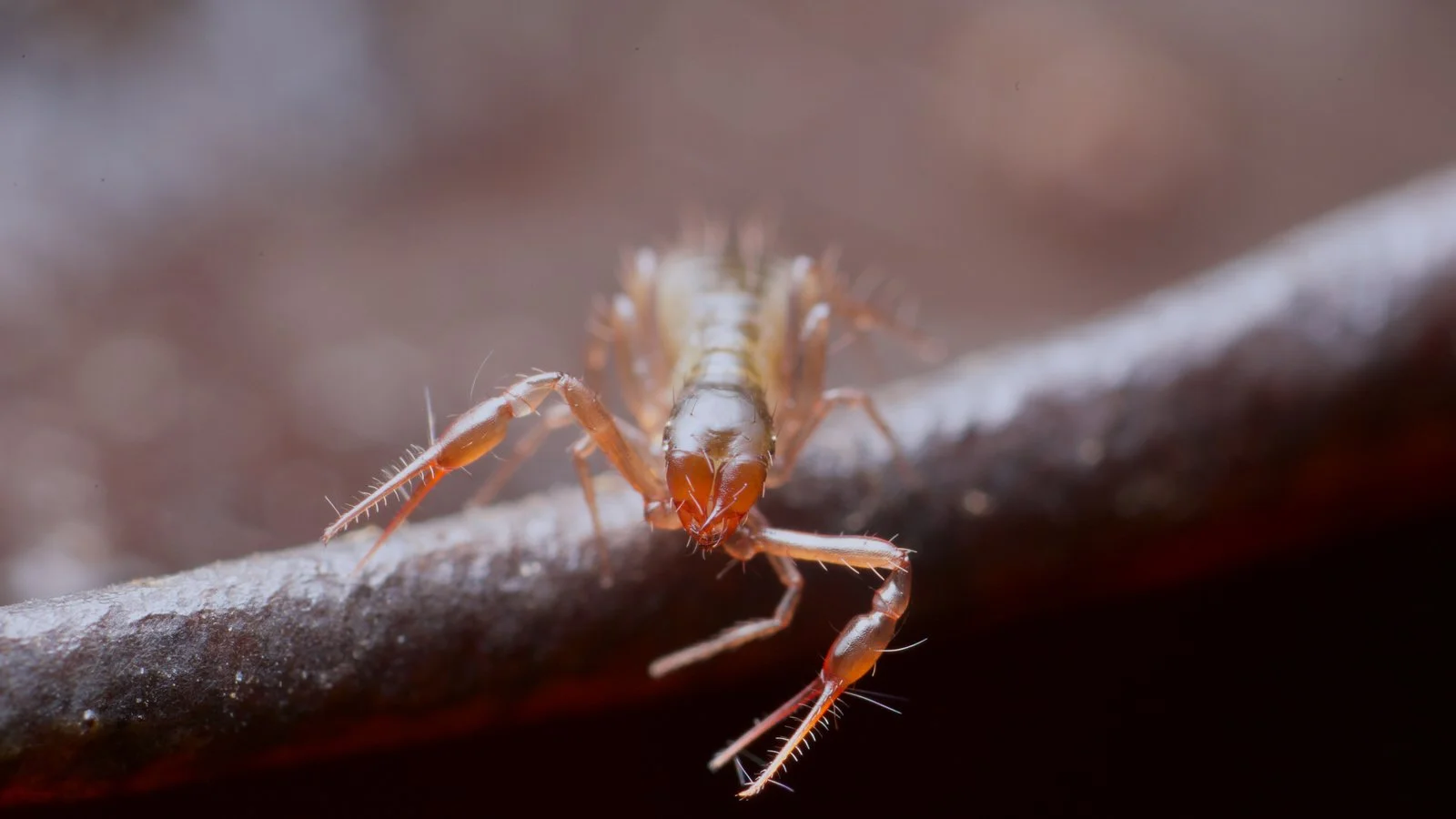
There are many types of fly larvae that can be seen on the street corner, so to speak... Some are rather beautiful, like these two, a far cry from the usual idea of a ‘maggot’ that so many people find revolting. Interestingly, although all maggots are fly larvae, not all fly larvae are maggots. I usually prefer the non-maggoty types.
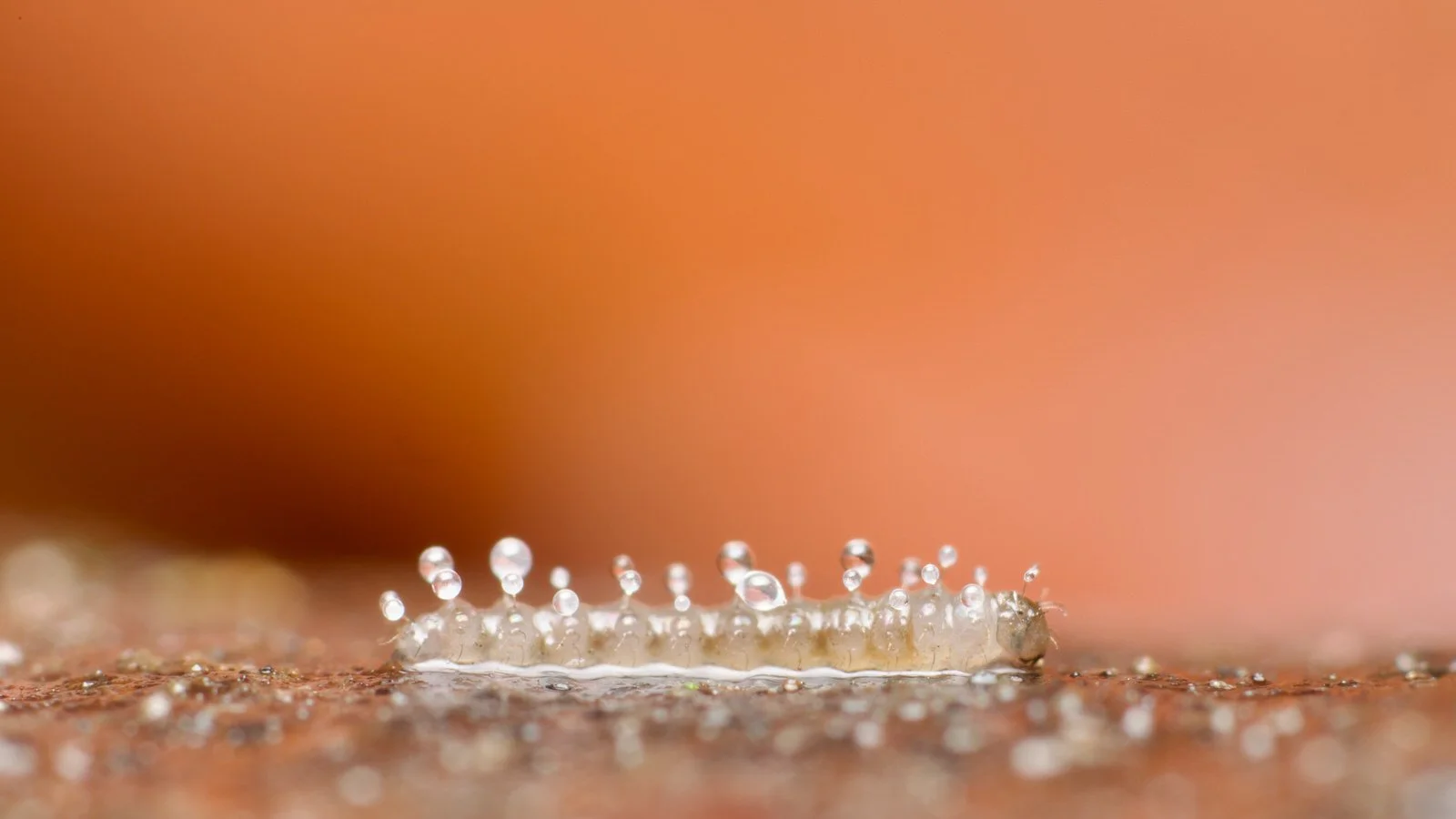
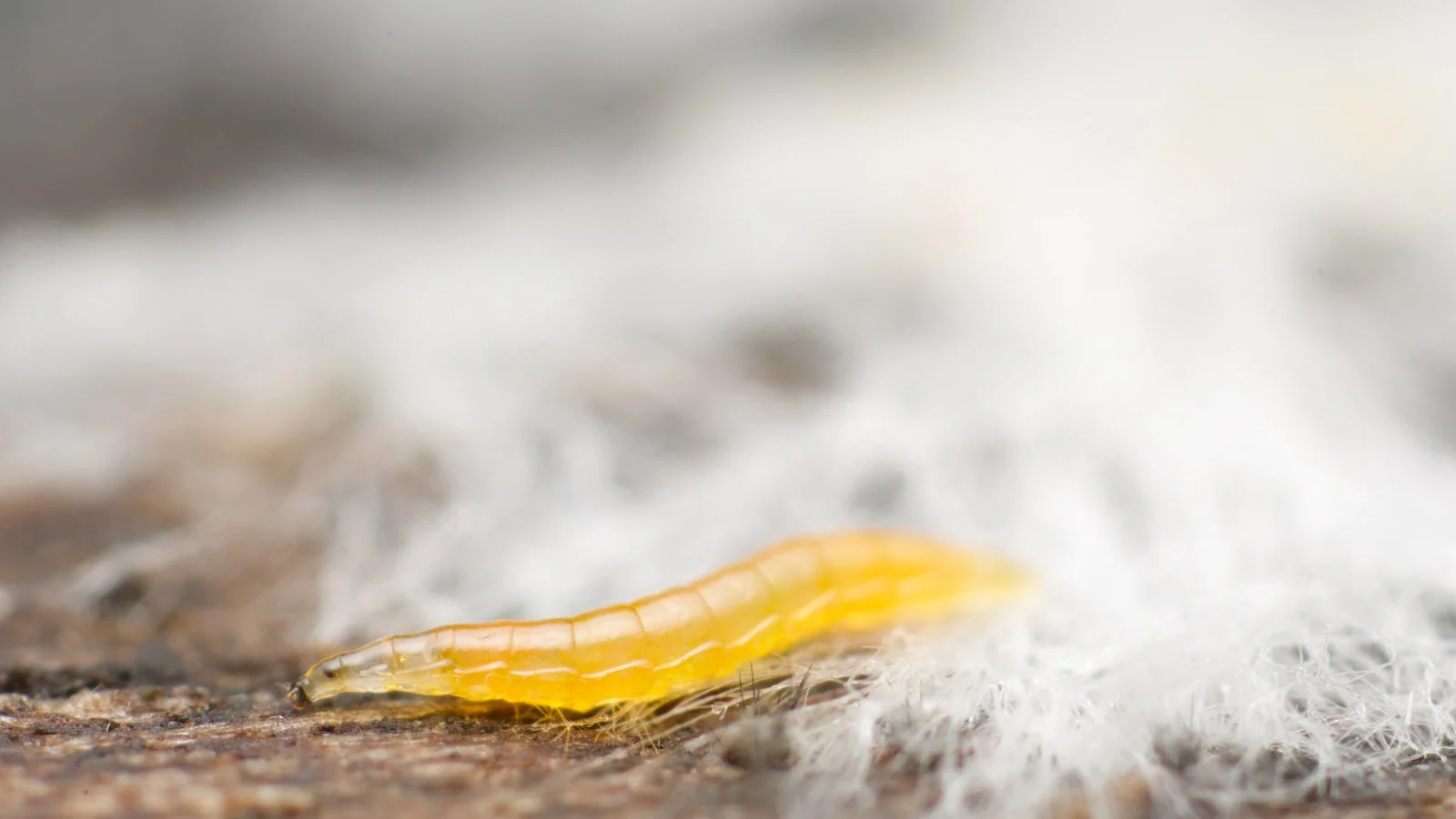
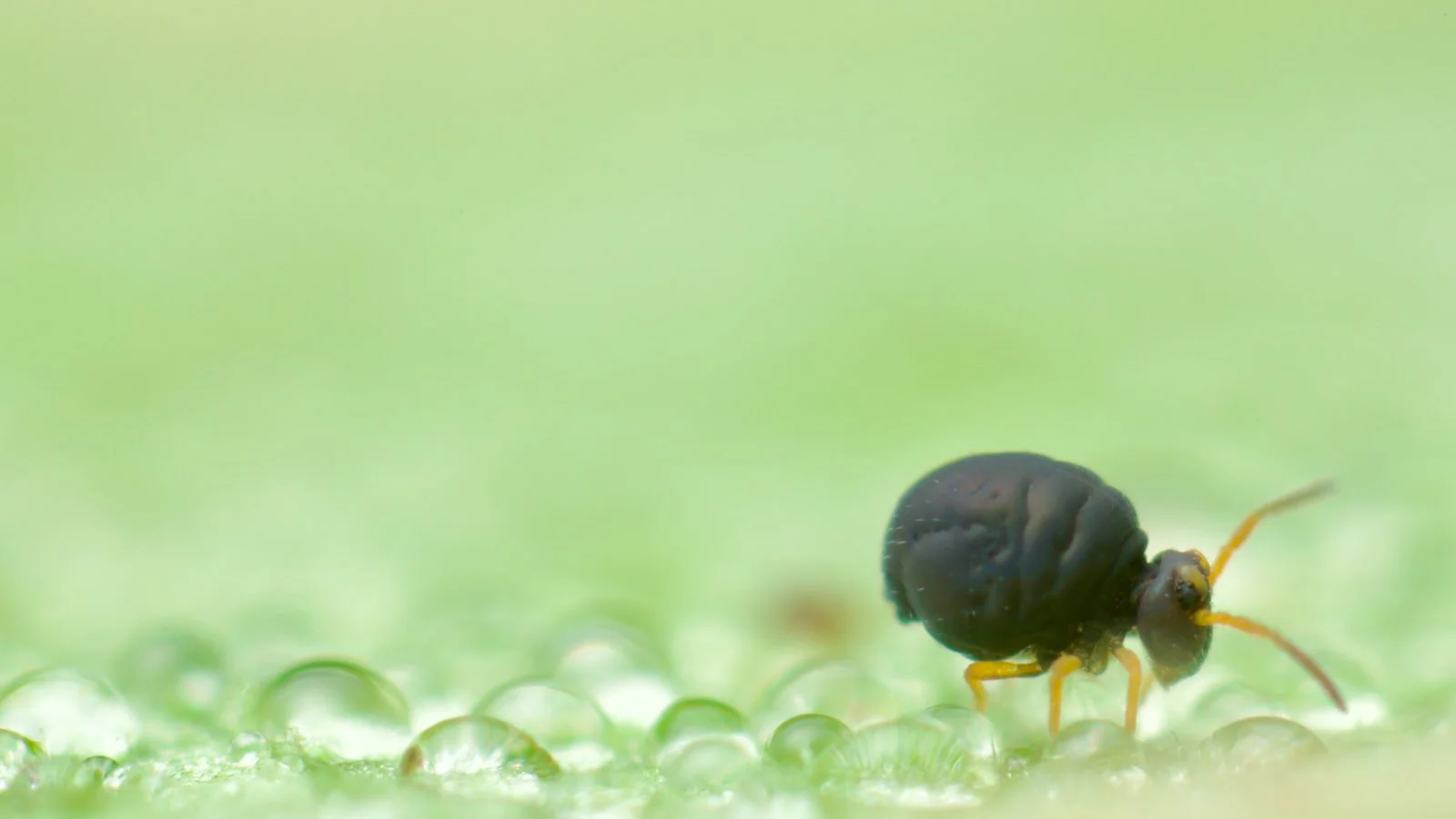
Water/dampness is always a good indicator when trying to find soil animals. After rain, or perhaps around a dripping, outdoor faucet or leaking pipe, look for organic material, whether a scrap of wood, a twig, fallen leaves or even moss growing on concrete. I found this Sminthurinus aureus forma ochropus globular springtail below in a pile of leaves in an urban and extremely polluted environment just after it rained, hence the amazing water droplets everywhere. The area was actually remarkably rich in springtails like this one, plus a few mites, and the yellow fly larva in the photo above.
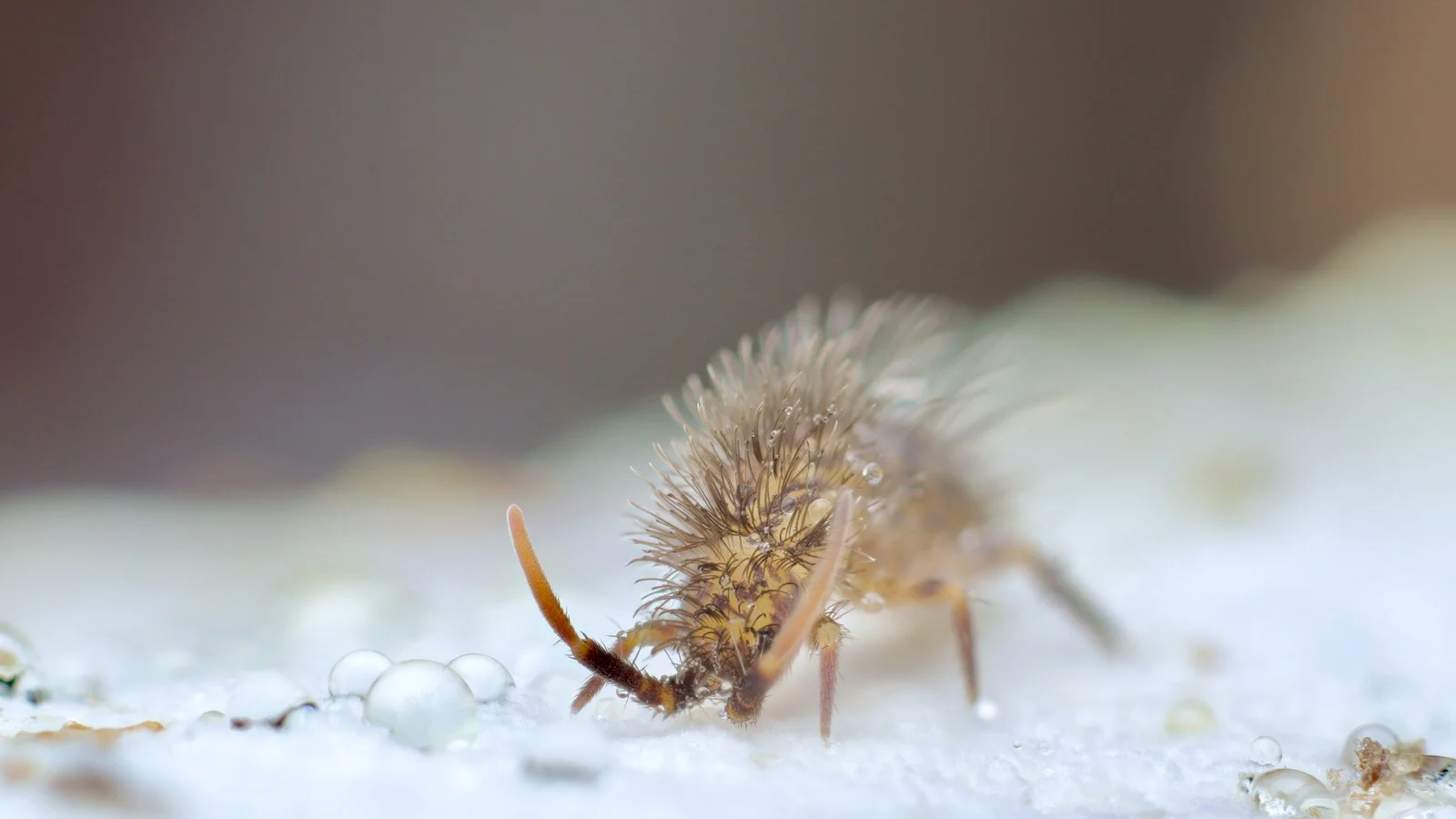
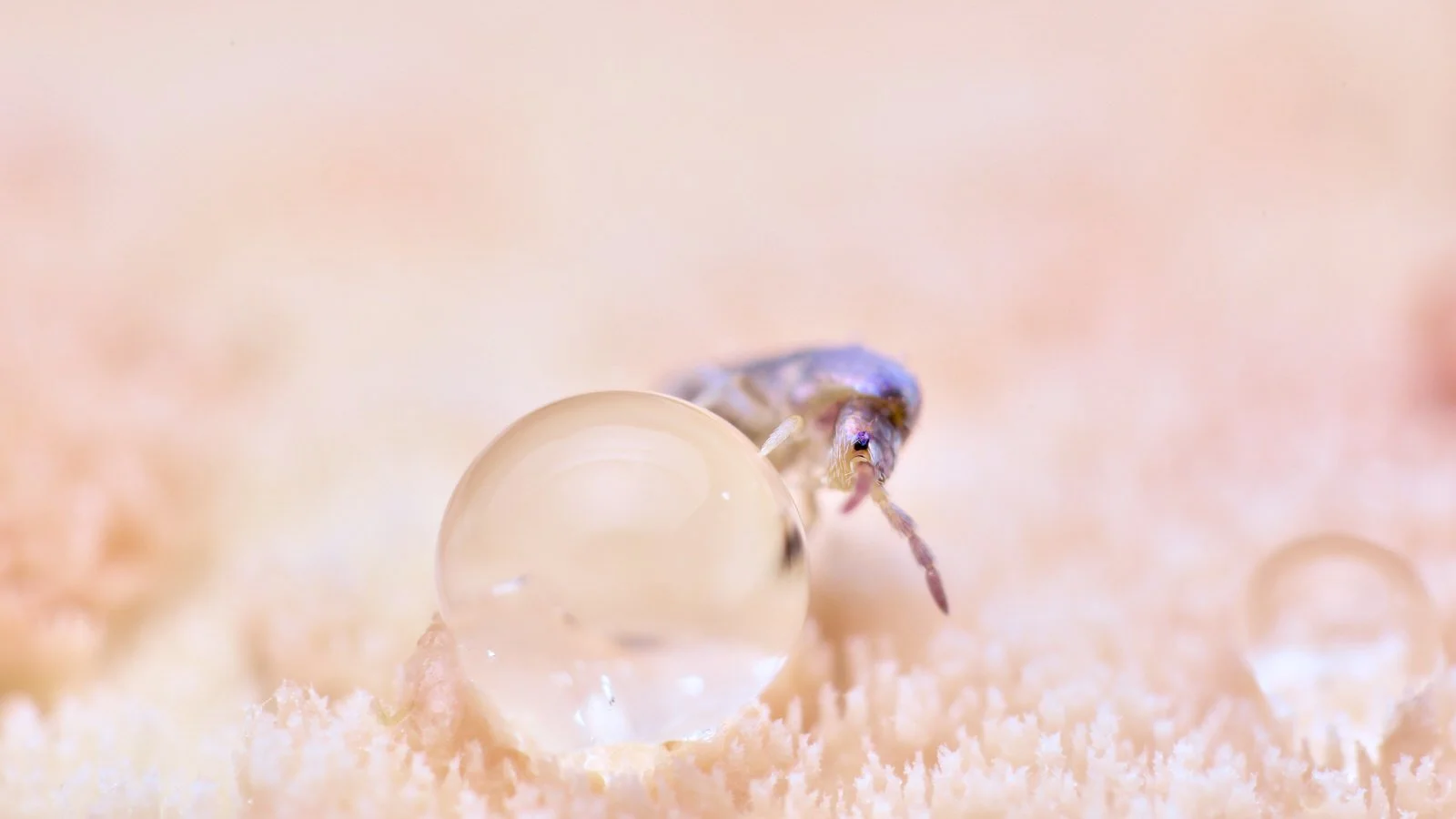
Water droplets remain a theme here… Orchesella villosa is an elongate springtail with a very hirsute look. They are a little bigger than globular springtails and this species as well as similar ones can be very common, especially on things like discarded timber that has lain on the ground for long enough to begin rotting and have white wood decay fungus, as shown here. Lepidocyrtus curvicollis, shown in the second photo, is also incredibly common, iridescent-scaled springtail, here photographed standing on a water droplet (I know!!). They share a very similar environment to O. villosa, so are often found together.
Finishing with the beautiful Tomocerus minor, another hugely common springtail in urban environments, replete with a furry ruff and a stack of shiny, metallic scales.
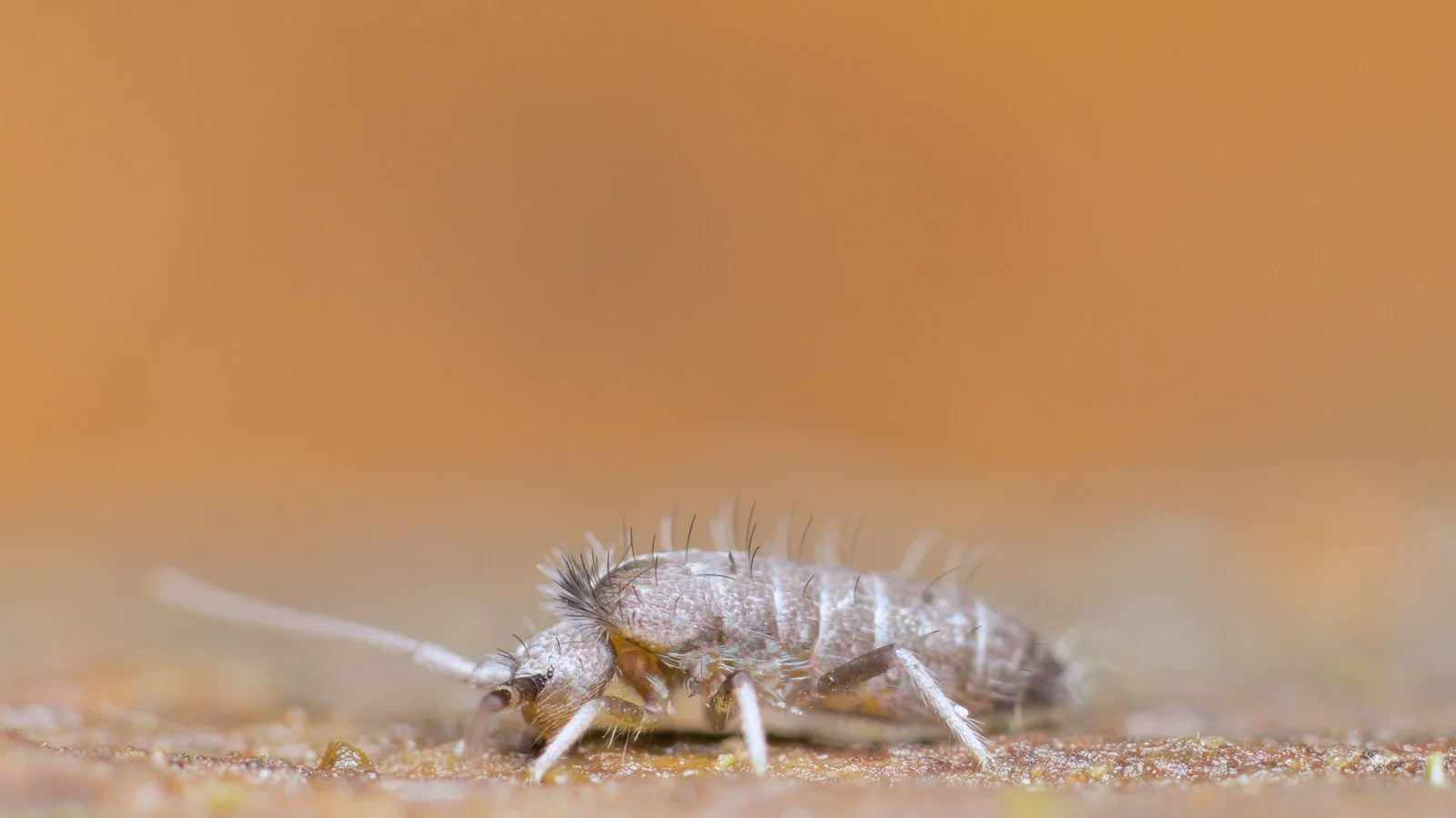
Tomocerus minor
So, this World Soil Day, give a thought to these small, incredible animals, surviving amongst the concrete, fumes and barrage of lights and noise in our cities. Their resilience is a reminder that nature is just waiting for a chance to return. We can all help to make a difference. By greening our surroundings in any way, whether through putting pressure on local government, getting involved in volunteering, making a rooftop garden, planting up some pots with flowers in a forgotten corner, or helping restore derelict ground to a green area, all the small changes add up to big changes in the end. And it is for the benefit of everyone and everything.